Driving in Nice: parking, ZFE rules and local tips

Essential information about the low emission zone, parking, driving rules and public transport in the southern city of Nice.
If you’re taking a road trip to glamorous Nice in the south of France, make sure you fully prepare for your journey and the experience of driving in the city. You’ll definitely need to check if your car is compliant for Nice’s low emission zone and where the best places are to park.
At a glance guide to driving in Nice
| Does Nice have a low emission zone? | Yes, it covers the city centre and the coast road from the airport. The ZFE zone bans certain high polluting vehicles |
| Where are the Park & Ride sites? | The 9 Parcazur park & ride sites are located at key hubs of the Nice tram & bus network |
| Can I park on the Promenade des Anglais? | No, parking is not permitted on the Promenade des Anglais |
Can I drive into Nice city centre?
Yes, you can, but Nice has a low emission zone in force (ZFE).
ZFE & Crit’ Air in Nice
This restricts access only to vehicles meeting the zone’s strict emission compliance standards, in accordance with the Crit’ Air nationwide system of stickers. In Nice only cars and light commercial vehicles that qualify for a Crit’ Air 3 sticker (Euro 4 for petrol vehicles, Euro 5 for diesel) can drive within the zone.
The ZFE in Nice covers the historic city centre, and the coastal Promenade des Anglais road as far as the junction with Avenue des Grenouillères in the western approaches. Remember to buy your Crit’ Air sticker in advance of your trip if you don’t already have one (they don’t expire), and display it at all times.
Where to park in Nice
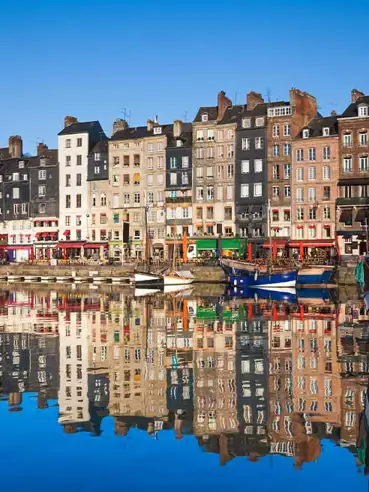
 Who wouldn’t want to drive into a scene like this?
On-street and car parks
There are several underground car parks within the city centre, such as the Gare du Sud car park in the Vernier district. Parking here for two days costs €63. On street car parking is limited to stays of 2 hours 15 minutes on weekdays, but is free overnight, on Sundays and public holidays. The first 30 minutes of on-street spaces are free, but they are hard to find and traffic in Nice is congested at peak times. Pay at roadside meters or apps.
When parking anywhere in Nice, but particularly in overground, popular locations such as along the Promenade des Anglais, be very wary of leaving any valuables or suitcases in your car. Thefts from parked vehicles are common in Nice, and hire cars and vehicles with overseas registration plates are targeted.
Parcazur park-and-ride
The easiest way to get around in Nice is to use one of the Parcazur park-and-ride facilities. These allow you to park your car at a site that connects to the Lignes d’Azur tram and bus network, giving free parking in exchange for a return ticket on public transport. The largest Parcazur car parks are at Vauban, just to the east of the old town, Henri Sappia, at the northern terminus of tram line 1, and Charles Ehrmann, in the west of the city near the athletics stadium.
Using the A8 to bypass the city centre
 The A8 is the main autoroute for the French Riviera
The main autoroute to Nice is the A8, which runs from Aix-en-Provence via Cannes, Antibes all the way to Menton, near the Italian border. The A8 is known locally as ‘La Provençale’, and is the main link road through the French Riviera. As such it can easily become congested, particularly at peak periods of the day and in the high summer season. While a functional motorway, it links up with more spectacular driving roads, such as Les Trois Corniches, the trio of breathtaking coastal roads between Nice and Monaco. The A8 gives access to Nice airport and the coastal suburbs, and the city centre between exits 50 and 55.
Local rules and signs
 Nice’s tram network connects with the city’s park and ride sites
There are no major differences to driving in Nice than anywhere else in France. Make sure you are aware of the basic road signs, and rules of the road. Give way to trams – there are three lines in the city centre. Nice is notorious for its speed camera traps, especially the one located in the underpass at Promenade du Paillon, one of the major traffic hubs of the city. Be prepared for plenty of roadworks too, and road closures that may not appear on your navigation app or SatNav.
Speed limits in Nice
You should expect the same speed limits in Nice as the rest of France -
| Normal conditions | Rain or precipitation | Visibility less than 50m | |
| Built up/urban areas | 50 km/h | 50 km/h | 50 km/h |
| Rural roads | 80 km/h or 90 km/h | 70 km/h | 50 km/h |
| Dual carriageways | 110 km/h | 100 km/h | 50 km/h |
| Autoroute (motorways) | 130 km/h | 110 km/h | 50 km/h |
Tolls and approaching Nice
 The drive to Nice is long but more than worth it
Driving to Nice from the LeShuttle terminal in Calais is a journey of around 12 ½ hours. The quickest route is via Reims, Dijon and Lyon, and then the A8 from Aix-en-Provence. Tolls are unavoidable on this major route, at a cost of around €130 each way. For such a journey it is strongly recommended to buy a toll tag in advance, which means you won’t have to come to a complete stop at the toll booth, and the payments will be taken automatically.
Start your Nice driving adventure with LeShuttle
If you’re thinking of driving to Nice, then the quickest way to get across the Channel and start your road trip is with LeShuttle. It’s just a 35-minute crossing from Folkestone to Calais.
FAQs
Do I need a Crit’Air sticker to enter central Nice?
Yes, you will need a Crit’Air sticker to enter Nice’s low emission zone.
Which Parcazur is best for a day trip to Vieux-Nice?
The most convenient of the Nice park and ride sites for exploring the old town in Nice is Parcazur Vauban. The tram ride to Vieux-Nice from the park and ride takes around 15 minutes.
Are ZFE rules active at night and weekends?
Yes, the conditions of the Nice low emission zone are enforced 24 hours a day, 7 days a week, with no exceptions.
Can I park near the Promenade des Anglais easily?
You won’t be able to park directly on the Promenade des Anglais (Walkway of the English). But you can find an underground car park nearby, like the Palais Masséna.
Is the A8 inside the Nice ZFE?
No, the A8 autoroute is beyond the limits of the Nice low emission zone.
Explore traveller guides