French road signs and driving rules

Everything you need to know about road signs and rules of the road in France.
When you’re driving in France you’ll see some familiar and not so familiar road signs. The traffic laws differ in some respects too. Road signs are meant to cut across language barriers, but having some knowledge of common French words that are used in signage helps.
What are the main differences with French road signs?
There are many signs in France that will be easy to understand, especially those related to speed limits and destinations. The images used on signs should also be fairly self-explanatory. However, there will be some signs that might not be immediately recognisable, or do not have UK equivalents.
Here are some of the more common types of signs you’ll see on French roads:
| type of sign | shape | colour | example |
|---|---|---|---|
| Warning | Triangular | Red border, white background | 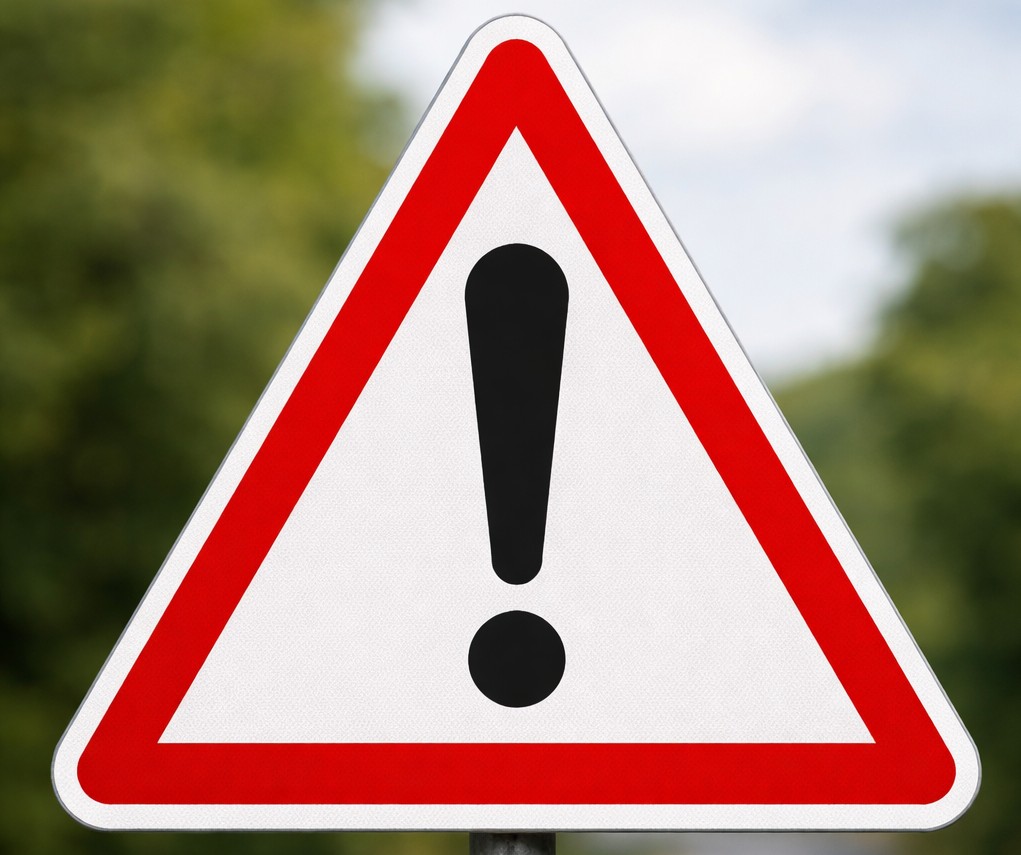 |
| Regulatory | Circular | White border, blue background | 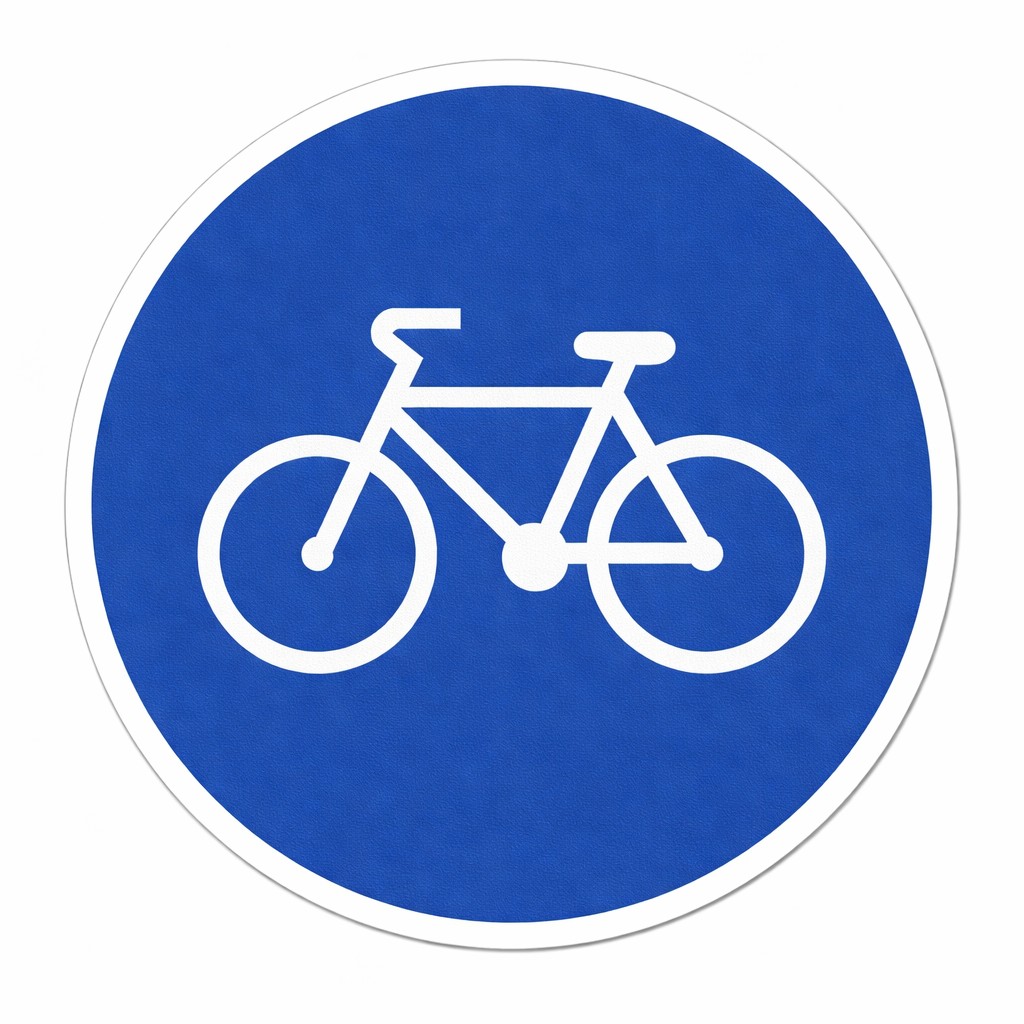 |
| Speed limit | Circular | Red border, white background | 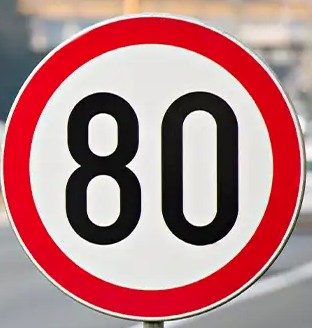 |
| Directional | Rectangular, with pointed end | Blue - autoroute Green - major roads Yellow - temporary roads/diversions White - local roads | 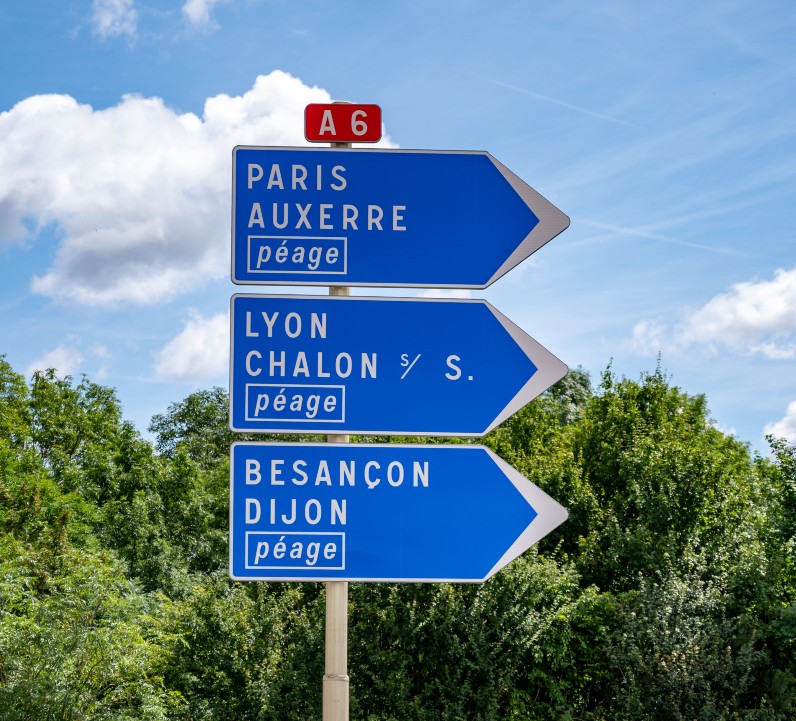 |
Common French road signs explained
 ‘Rappel‘ means reminder – usually that speed limits are still in place
Rappel
You’ll see ‘Rappel’ a lot on French road signs. Rappel means ‘reminder’, and is usually associated with speed limits, but not exclusively. It is an instruction to drivers that the previously indicated speed limit is still in force, and reminds them to keep to it. But it can also apply to other warning information, such as falling rocks or animals on the road, underneath triangular signs.
Priorité à droite
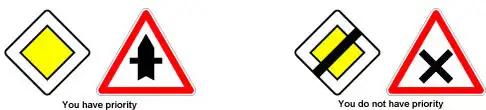
In France, it is still common practice to give priority to traffic joining at a junction or roundabout from the right. This is especially the case in the countryside and smaller towns, though you should be aware of it in cities too. This system is called ‘Priorité à Droite’. This can be indicated in several ways, such as a yellow diamond sign with a black stripe across it, but also a triangular warning sign with an X. In some rural areas there may not even be a sign, but ‘priorité à droite’ will be assumed to apply.
When a yellow diamond sign does not have the diagonal black stripe across it, or the triangular sign has an arrow pointing upwards, this means that you have right of way at the next junction.
Cédez le passage
In the UK, an upturned triangular white sign with a red border means give way at the junction. In France it means the same, but the words, Cédez le Passage, will be displayed below the sign rather than in the white background.
Allumez vos feux
This means ‘turn on your lights’, and appears as a blue circular sign. It will be displayed when headlights become mandatory. You’ll often see these signs on the approach to tunnels or underpasses. There will be an accompanying sign advising you to turn off your headlights, ‘Fin d’allumage des feux’.
Useful words to look out for on French road signs
- Ouvert – Open
- Fermé – Closed
- Péage – Toll booth
- Gauche – Left
- Droite – Right
- Suivre – Follow
- Arrêt – Stop
- Le sens interdit – No entry
- Ralentir – Slow down
- Sens unique – One way
- Sauf riverains – Except for residents
Rules at roundabouts
 Remember to give way to the left for traffic already on French roundabouts
Roundabouts are often the features of driving abroad that most concern UK drivers. It can be difficult at first to change years of learnt behaviour, but once you’ve driven a few roundabouts in France the rules will start to become second nature. The most important rule is to give way to vehicles already on the roundabout coming from the left. Drive anti-clockwise, but be aware that ‘Priorité à droite’ applies on French roundabouts unless otherwise indicated. So vehicles can still join from the right and have priority.
Overtaking on French roads
In France the rules are you overtake on the left. In exceptional circumstances, overtaking on the right in multi-lane traffic is permitted if traffic is moving slower in the left hand lanes. Illegally overtaking on the right can lead to a fine. Sections of road where overtaking is not allowed have an unbroken white line down the middle. The road signs in France for no overtaking are the same as in the UK, but reversed – a red car on the left and a black car on the right. The same sign with a diagonal black stripe across it means the restriction on overtaking has been lifted.
Using your horn in France
 Use of the horn is severely restricted in France
One thing that that might surprise you about driving in France are the restrictions around the use of the car horn. It should only be used to warn of immediate risk to other road users, rather than as an expression of frustration or anger. In built-up areas the horn is banned at all times except for life threatening danger; in rural areas the horn can only be used during daylight hours, and only to warn of risk or before blind bends on narrow roads. At all other times headlights are to be flashed instead, except in emergencies.
Misuse of the horn is punishable with an on-the-spot fine.
Traffic lights and flashing signals
The three colour system for traffic lights is the same in France, with one key distinction. There is no hard amber light, but a flashing amber phase.
Here is what the signals mean in France:
• Flashing red – no entry, level crossing or exit used by emergency vehicles
• Flashing amber – proceed with caution, give way to vehicles from the right
• Amber arrow – proceed in the direction indicated, giving way where necessary
• Green – proceed with caution
Stay updated with driving requirements in France
Road signs are one of the key things to be aware of when driving in France. See our other driving information guides, which are updated regularly as regulations change:
FAQs
Do signs differ in rural areas of France?
Yes, some road signs are different in rural areas of France, but what you will often find is that there is less signage in general, with road behaviour assumed rather than indicated (especially regarding ‘priorité à droite’).
What do blue signs mean?
Circular or rectangular blue road signs in France are instructional or regulatory in nature, providing information about a road feature or guidance to drivers, such as to turn on their headlights.
What does "sauf riverains" mean?
"Sauf riverains" means ‘except for residents’ or ‘except for local traffic’. When you see this on road signs in France, you should only use the road if you have a purpose there, such as visiting friends or delivering to a business. You shouldn’t drive through such a road for any other reason. A “sauf riverains" sign is like a no entry sign in the UK – a white dash on a red circular background, with the text below it.
Explore traveller guides