Driving in France for new drivers and first-time travellers

Driving in France for the first time is exciting, and there is no better way to explore this wonderful country. Here’s a few things to know before you get behind the wheel and leave our Calais terminal.
Driving in France for new drivers and first-time travellers
Driving in France for the first time, or if you are a new driver, may seem daunting, but once you appreciate the basic differences you will quickly get used to it. In no time at all you will be planning your first road trip across the Channel!
Here are some frequently asked questions about driving in France.
Is driving in France easy?
Driving in France is not fundamentally different to anywhere else on the Continent. Driving on the different side of the road is the main difference, and if you are driving your own car (rather than a French hire car) this will take a little getting used to.
What do I need to know before driving in France?
What side of the road do they drive on in France?
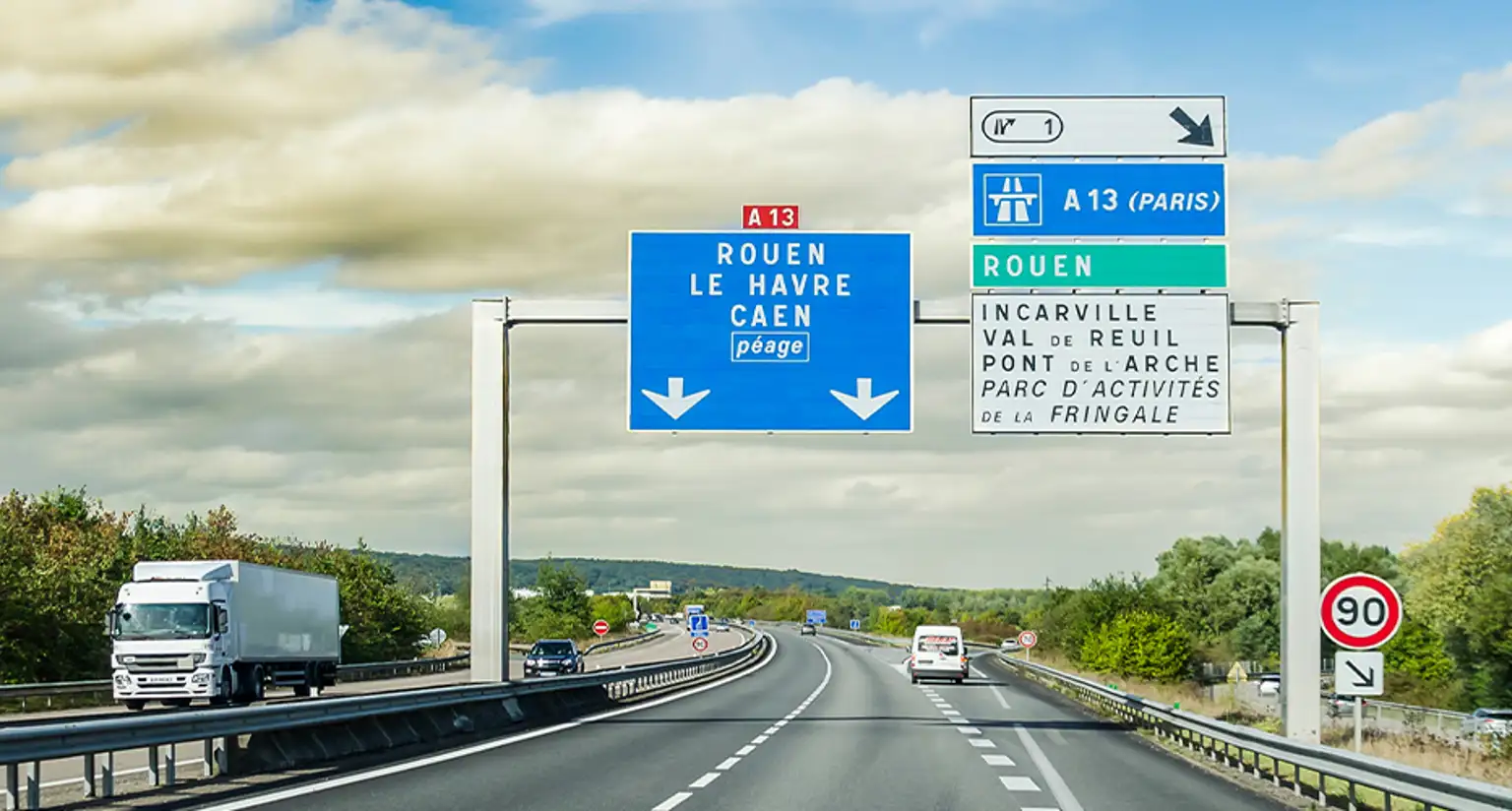
You drive on the right on French roads. On motorways and dual carriageways the slow lane is on the right, and you overtake in the left lane.
What is the speed limit in France?
There are various speed limits in France, depending on the kind of roads you are driving on. These are the limits for dry conditions, but are lowered for wet roads on motorways, dual carriageways and main roads in urban areas:
- Autoroutes/motorways – 130 km/h
- Dual carriageways – 110 km/h
- Main roads outside urban areas/A & B roads – 80 km/h - 90 km/h (1)
- Main roads within urban areas – 50 km/h
Being caught by the police exceeding the speed limit will incur an immediate fine. You could also lose your licence, face a ban or be arrested.
Are there lower speed limits for new drivers in France?
You may have heard this, and yes, French drivers who have just passed their driving test do have to observe lower speed limits. But these rules do not apply to drivers from the UK.
What is the minimum age to drive in France?
You need to be 18 years old to drive in France.
Can I use a satnav and a phone mount in France?
You can use a satnav and mapping apps in France, but you must disable any speed camera detection or location functionality, as this kind of technology is illegal in France. Using a phone mount is permitted, as long as it is positioned discreetly and does not distract you or other drivers.
What do I need to drive in France?
Is it compulsory to carry a spare wheel in France?
You do not need to have a spare wheel, but make sure your tyres have the minimum tread depth of 1.6mm.
What documents do you need to carry with you when driving in France?
These are the documents you should have with you:
- Full, valid UK driving licence
- Proof of ID (passport)
- Motor insurance certificate
- V5 registration document
Do you need hi-vis jackets in France?
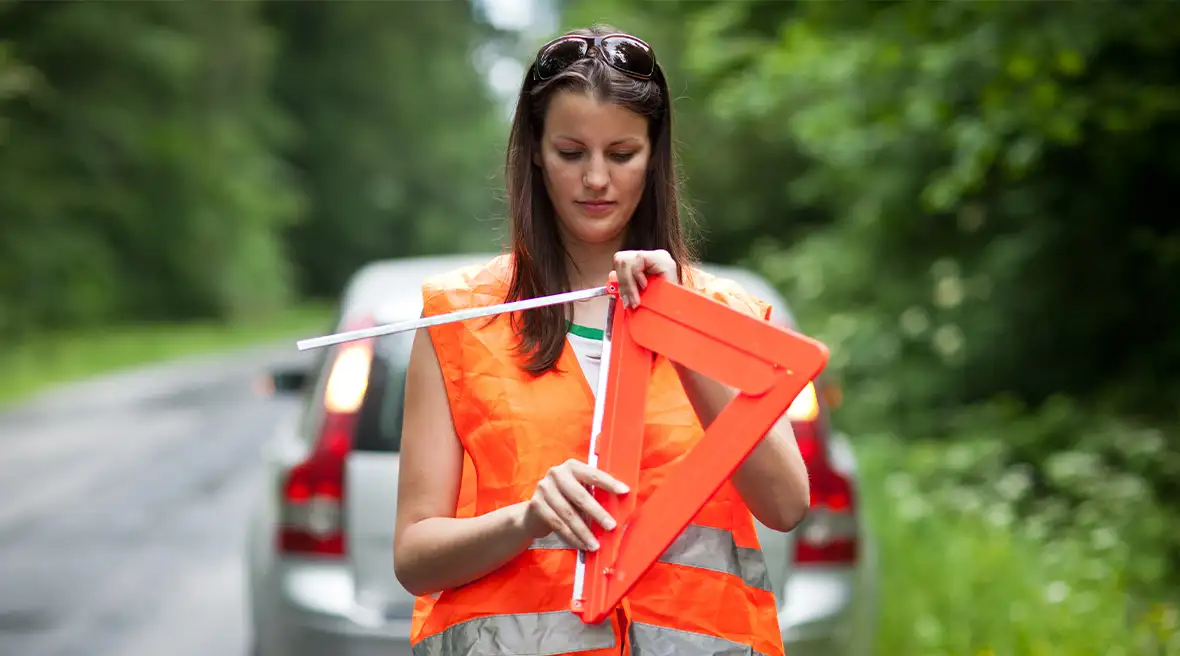
Yes. Hi-vis or reflective jackets for each occupant of the car are mandatory in France. They must be within easy reach inside the vehicle. You must also have a warning triangle in case you have an accident.
Do I also need headlamp deflectors?
Yes, as you will be driving on the right hand side of the road, you will need headlamp convertors to deflect the light from your vehicle’s main beam so it does not distract road users driving in the opposite direction. These stickers are widely available, cheap to buy and are easy to fix onto your headlight casing.
You should buy all these essential items before you travel, if you do not already have them – or pick them up from the AA Shop at our Folkestone terminal.
Do I need a Crit’ Air sticker?
Yes, if you are driving into French cities (especially in city centres) you will need a Crit’ Air sticker. This is because all French cities with populations above 100,000 enforce low emission zones or ZCFs. Vehicles must display a Crit’ Air sticker when driving in a low emission zone. They indicate the emissions level of your car, and some older vehicles may not even qualify for a Crit’ Air sticker. The cut-off point will change in different cities, so it is worth finding out the criteria for the city you will be travelling in.
You must buy your Crit’ Air sticker before you arrive in France. There is only a small fee, they have a continuous validity period, and can be ordered online.
UK stickers
Do you still need a GB sticker?
GB stickers are no longer valid for vehicles registered in the UK when driving abroad. Registration plates with the GB letters and the EU symbol that have been valid since 2001 are also no longer valid, but there is no requirement to replace these plates as long as a UK sticker is displayed.
Do I need a UK sticker to drive in France?
Yes. Your number plate can also incorporate the UK identifier with the Union flag.
Where do you put a UK sticker on a car?
The UK sticker should be fixed prominently on the rear of your vehicle, preferably on the left hand side of the number plate.
What insurance do I need to drive in France?
You should at least have third party cover as a minimum legal requirement, but it is advisable to have fully comprehensive cover in place before you begin your journey. This will cover any costs resulting from an accident in France.
Check your insurance cover before your travel to ensure you are fully covered for the entire duration of your stay in France.
Tolls
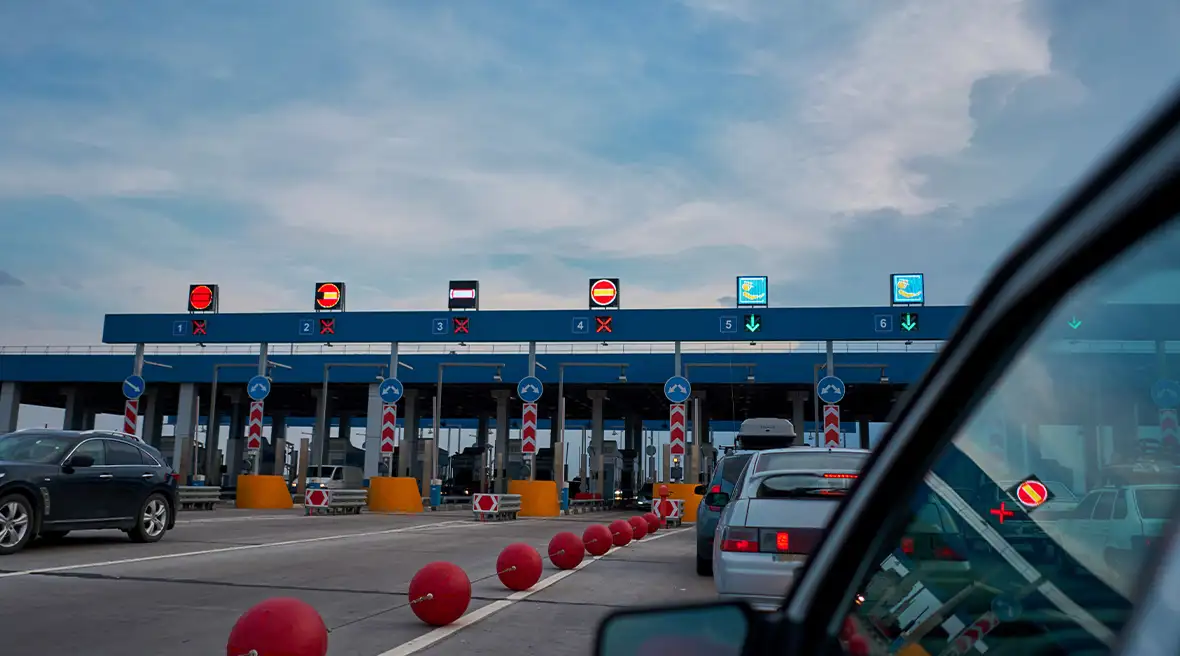
France is one of the handful of European countries where a countrywide system of motorway toll charges are in place. Most long journeys via motorways in France will incur a toll charge. You don’t have to pay in advance, as the tolls are usually paid when you exit the motorway.
How expensive are tolls in France?
The toll charges will vary, depending on how far you have driven. In 2025 toll charges were increased throughout France. To find out what the toll charges will be you can use a toll calculator.
How do I pay French tolls?
Drivers can pay at the booths (péages) via cash, card or mobile device, but payment can also be automated with a toll tag, so that you do not have to stop your car and avoid queuing in order to pay. More and more motorways are employing a free flowing payment system (‘flux libre’), where cars do not have to stop at a toll booth. Cameras detect registration plates and drivers have up to 72 hours to pay, or payment is automatically taken from toll tag accounts.
Is it worth getting a toll tag for France?
If you are doing a lot of driving in France then a toll tag is certainly worth buying. It will speed up your progress through the toll barriers. With an Emovis toll tag you drive in the automated toll lanes. Simply attach the tag to your windscreen behind the rear view mirror.
Apply for an Emovis tag for free (saving €10) with LeShuttle.
French road signs
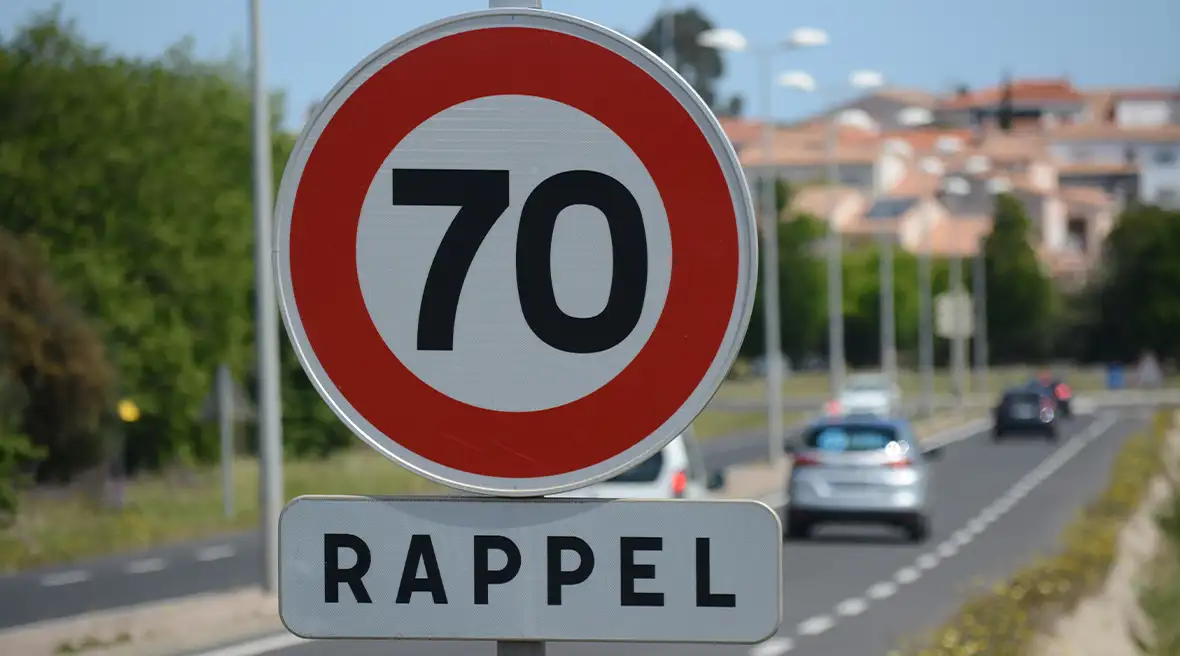
What does rappel mean on French roads?
‘Rappel’ on a French road sign means ‘reminder’. They are there to remind drivers that speed restrictions most recently passed are still in place.
What does the yellow diamond road sign mean in France?
A yellow diamond with a white border means that the ‘Priorité à Droite’ rule (giving way to traffic from the right) does not apply at the next junction.
What do the arrows on French roads mean?
A slightly curved white arrow in the middle of a single lane on a French road indicates that the passing lane or overtaking lane is coming to an end. Once you see one of these arrows it is too late to start to overtake.
A flat white arrow in your lane of traffic usually means you have right of way.
What does a flashing amber light mean in France?
At traffic lights a continuously flashing amber light means that drivers can proceed if the road is clear. If not, then they should give way to other vehicles or pedestrians.
Can I turn right on a red light in France?
No. You can however turn right without stopping if a triangle shaped amber light is flashing, as long as there are no other vehicles or pedestrians crossing the road.
Fuelling-up in France
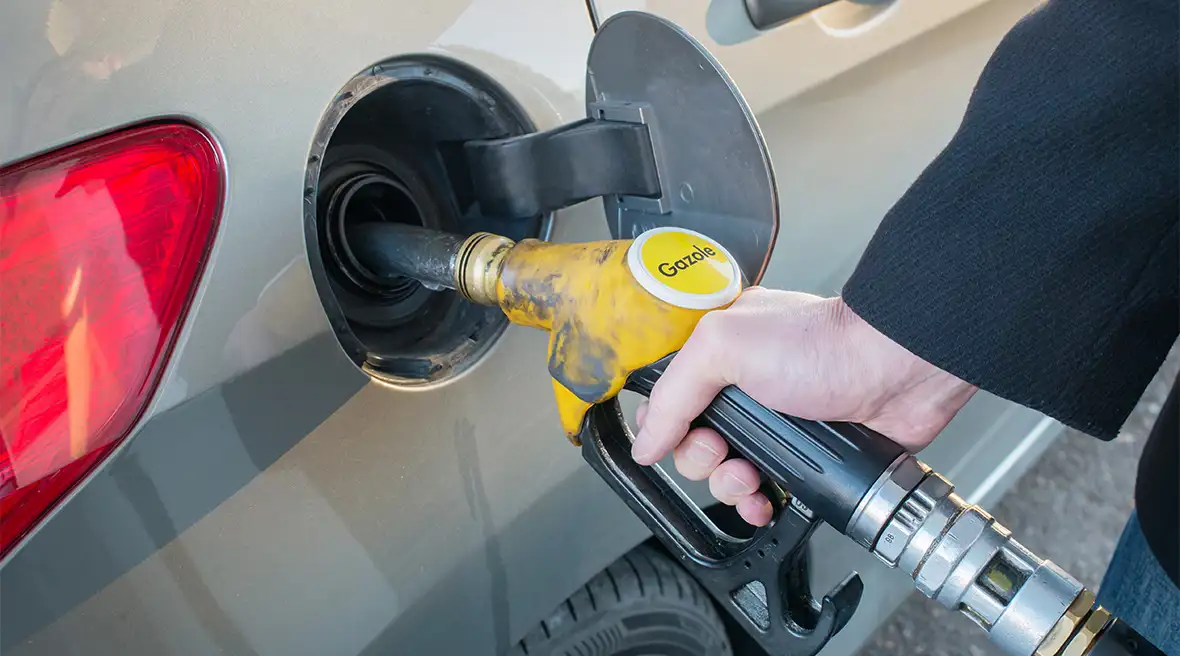
How do you fuel a car in France?
Filling up in France is virtually the same as in the UK. You can pay either at the pump itself by card or at the cashier’s desk in person. You just need to understand the French words for the different types of fuel, and the colours of the pumps.
What do the French call diesel?
Diesel is called ‘Gazole’ or ‘Gasoil’. These pumps will be colour coded yellow.
What is unleaded in France?
Unleaded pumps are green and known as ‘Sans Plomb’.
Parking rules in France
What does a yellow painted kerb mean in France?
A yellow painted line on a kerb is an indication to drivers that they cannot wait or park on that section of road.
What do blue parking lines mean in France?
A single blue line means that parking is permitted for free for up to an hour.
Find out more about driving in France
If you need more information, from what documents to bring to the rules on seatbelts, check out our driving to France page.
Start your first adventure in France with LeShuttle
Driving in France for the first time is exciting. Just make sure you’re prepared. There’s no time to get nervous either, with just a 35-minute crossing from our Folkestone terminal. Before you know it you will be driving in France!
FAQs for first-time drivers in France
What if I take the wrong exit?
Can I use cruise control?
Join Club LeShuttle