Driving to Rennes

All you need to know about a road trip to Rennes, the capital of Brittany.
Find out about travel times, routes, tolls, parking and the low emissions zone in Rennes, the historic city in Brittany.
Why visit Rennes?
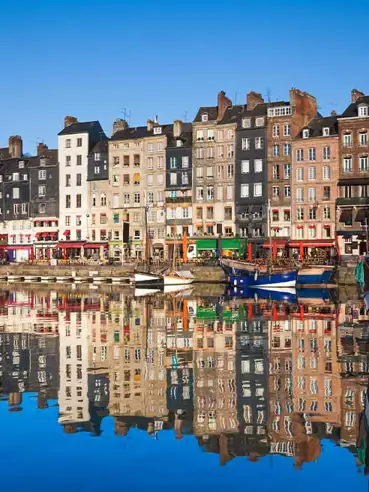
Known for its quirky half-timbered buildings, stunning classical and medieval architecture and lively gastronomic scene, Rennes is a hidden French gem. It’s also the perfect base for exploring the region’s breathtaking coastal landscape on a Brittany road trip. Brittany can sometimes feel like an independent country, a French version of Cornwall, and Rennes is its proud capital, full of traditional Breton food and culture.
Where is Rennes?
Rennes is the largest city in Brittany, at the confluence of the Ille and Vilaine rivers in the east of the region. It is around an hour’s drive from Rennes to both Mont Saint-Michel and Saint-Malo, two of Brittany’s most popular destinations. Rennes is 525 km from Calais.
How to drive from Calais to Rennes
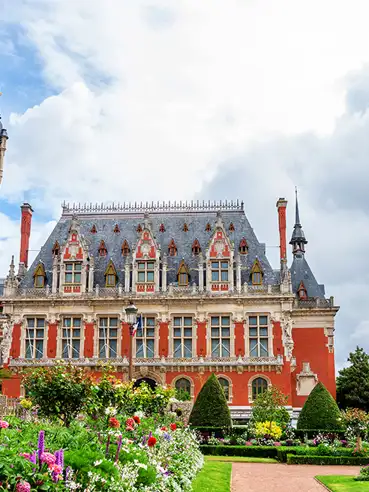
 Rennes has a wealth of neoclassical buildings
The quick route – via the A84 autoroute
The most direct route to drive to Rennes from the LeShuttle terminal at Calais takes around 5 ½ hours. From Calais take the A16 towards Abbeville, and then pick up the A28 and A29 towards Caen. From Caen its the A84 autoroute from Normandy to Brittany all the way to Rennes. Tolls for this route from Calais to Rennes will be around €30 each way, with 5 toll plazas.
The Paris route
A more leisurely way from Calais to Rennes is to stay on the A16 at Abbeville and head towards Paris. It’s a slightly longer route, with higher tolls to pay, but has the benefit of passing close to more places of interest. For example, if you’ve got some time to spare, you could stop at the Palace of Versailles, the city of Chartres, famous for its medieval cathedral, or the motor racing mecca of Le Mans. This journey will take around 6 ½ hours, but is more suited for an overnight road trip.
Plan your trip from Calais to Rennes by car
 You’ll have to pay tolls on French roads
Tolls and motorway fees
France is one of a handful of European nations (Spain and Italy are the notable others) with a countrywide system of motorway tolls. So wherever you travel in France on a major road, you are going to have to pay tolls. As we have mentioned, driving to Rennes costs around €30 each way in tolls. With LeShuttle you can apply for an Emovis tag for free, and drive straight through the toll plazas without stopping. Your toll will automatically be paid.
Parking in Rennes city centre
There is some limited on-street parking in the city centre of Rennes, but it gets more expensive the closer in you get and stays are more limited. The best option is to use one of the large municipal underground car parks dotted around the city, and get about on the Metro. Rennes was the smallest city in the world to have its own underground rail network when it opened in 2002. There are 2 lines and 28 stations.
Driving rules in France
The driving rules in France are fairly straightforward. You drive on the right, and vehicles coming from the right at junctions (priorité à droite) have right of way. The speed limit is 130 km/h on motorways (80 mph), and 50 km/h on urban roads (31 mph), similar to the UK. You’ll need to have a hi-vis jacket in your vehicle for each occupant, and a warning triangle in case of accidents. Here are more rules of the road in France.
Navigating the Rocade de Rennes - Rennes’ ring road
The Rocade de Rennes is the N136 ring road round the city, which also marks the outer boundary of the Low Emission Zone (ZFE) – although the Rocade itself is exempt. At peak times the Rocade can become congested, but wherever you want to drive in and around Rennes you will need to spend some time on the N136.
Crit’ Air Stickers
All French towns and cities with a population over 150,000 people enforce a Low Emission Zone (ZFE) – Rennes is no exemption. To drive into the ZFE you must have a Crit’ Air sticker to indicate your vehicle’s emission status. These stickers should be purchased before entry into France and attached to the vehicle’s windscreen. If you don’t have a sticker and are caught driving in the Rennes ZFE you could be fined up to €135.
Top things to see and do in Rennes
 The magnificent nave of Rennes cathedral
Visit Rennes Cathedral
The striking baroque and neoclassical architecture of Cathédrale Saint-Pierre stands out amongst the cobbled streets of Rennes old town. A major ecclesiastical site since the 6th century, the building has been rebuilt many times, and has seen plenty of history. It was the place where Henry VII of England agreed to marry Elizabeth of York in 1483, leading to the foundation of the Tudor dynasty. There is no charge to enter to see the magnificent nave and marble altar.
Stroll through Parc de Thabor
In the centre of Rennes, Parc du Thabor is the perfect place to come for a walk or a picnic. A mix of parkland, formal gardens and wooded areas, it’s the biggest public green space in the city. Among its most notable features are the beautiful Orangerie, the du Guesclin lawn square, the colourful borders, follies and statues in the French garden, and the landscaped gardens.
Explore La Place des Lices and Rue du Chapitre
 The medieval buildings of Rennes
The main square of Rennes is the heart of the old town, with its crooked half-timbered houses, terraced cafés, bars and restaurants. Make sure you pay a visit to La Place des Lices on Saturday morning for market day. It’s your chance to try local produce and delicacies, such as Breton cider and salted butter. Not far away in the meandering maze of lanes you’ll find one of the oldest streets in Rennes, Rue du Chapitre – a survivor of the devastating fire of 1720 that has kept many of its colourful medieval buildings.
Discover Musée des Beaux-Arts
Like many such museums in France, the Musée des Beaux-Arts in Rennes was established during the French Revolution, when artworks were seized from public buildings and put on display in dedicated collections. The museum in Rennes includes sculpture, painting and sketches by such artists as Rubens, Claude Vignon and Leonardo da Vinci. Entry to the permanent collections are free, and the museum is open Tuesdays to Sundays.
Eating and drinking in Rennes
 Indulge yourself in Rennes with a galette!
When in Brittany, do as the Bretons do: eat crêpes and galettes. The crêpe has a recipe hundreds of years in the making, and is still as popular as ever. A galette is slightly less common, at least in the UK. Galettes are made with buckwheat flour, and similar in texture to a potato pancake. Will you choose sweet or savoury?
Rennes is a university city, and has a bustling nightlife. You’ll find plenty of bars, clubs and restaurants to choose from. As you’re in Brittany, try the cidre, chouchen (mead) and cider brandy aperitif called ‘Pommeau de Bretagne’, all made from the local apples.
Plan your Rennes road trip with LeShuttle
If you’re looking for a base for your Brittany road trip, head to Rennes. It’s just a 35-minute crossing from Folkestone to Calais with LeShuttle.
Book your next adventure
Explore traveller guides