Tour de France
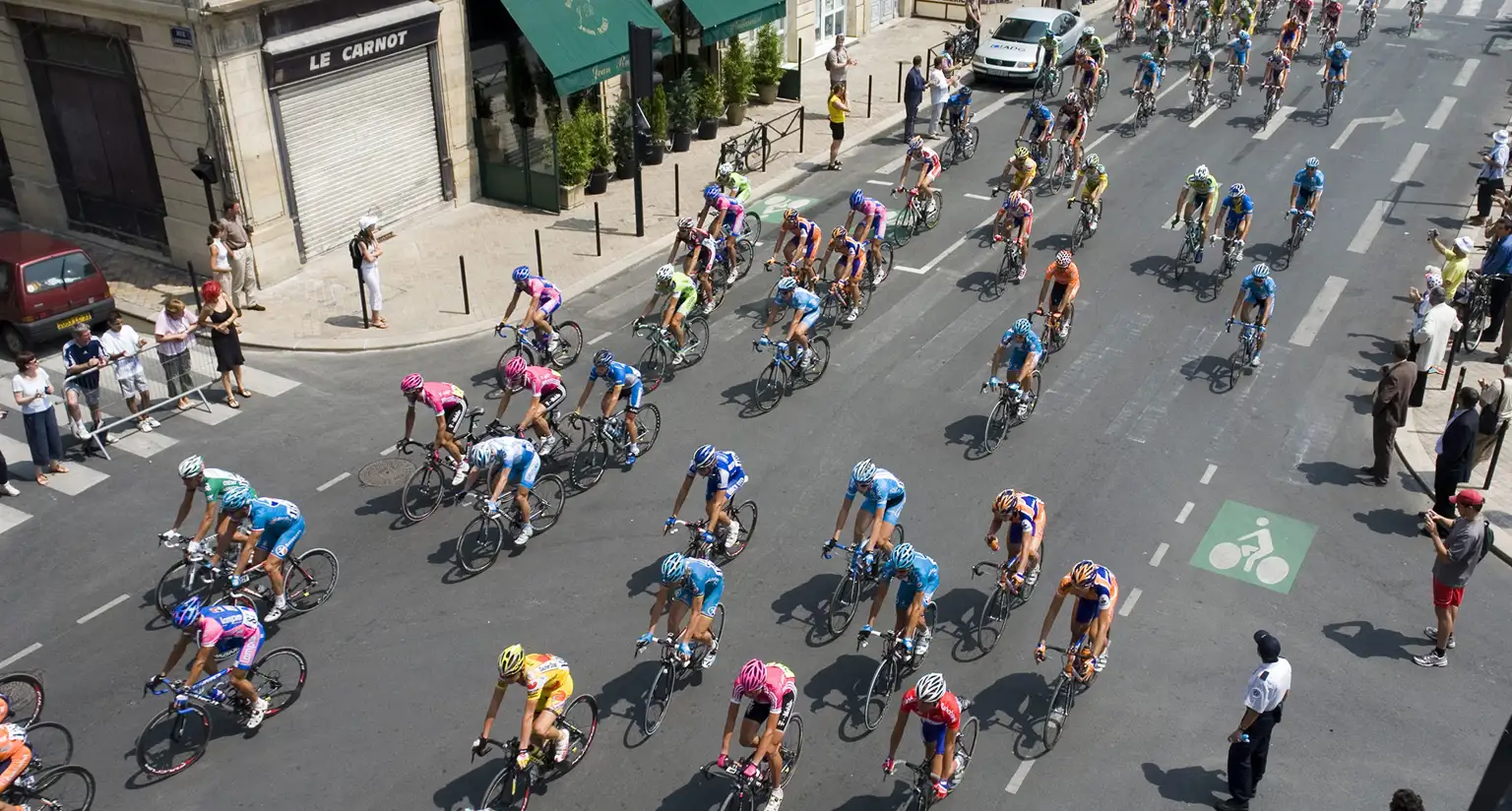
The world’s greatest bike race. Watch it from the streets, the hills and the mountains, or cycle it yourself!
Covering more than 3,000 miles, from the mountain passes of the Alps and the Pyrenees to the glamorous streets of Paris, the Tour de France is the highlight of the competitive cycling calendar.
What is the Tour de France?
The Tour de France is an annual road cycling race that predominately takes place in France.
Part of the UCI WorldTour, it is one of cycling’s most prestigious races and is officially regulated by the Union Cycliste Internationale (UCI), the sport’s international governing body.
Why the Tour de France is unmissable for cycling fans
For three weeks in July every year France comes out to be part of “La Grande Boucle”. It is a marvellous spectacle, as the colourful peloton sweeps through the stunning French countryside, followed by a cavalcade of support vehicles and cheered on by huge crowds. Full of gruelling climbs, spectacular descents and exciting sprints, there is nothing quite like the Tour de France.
If you are a cycling fan, or just want to see more of the France it travels through, LeShuttle can help you be part of the world’s greatest bike race.
A brief history of the Tour de France
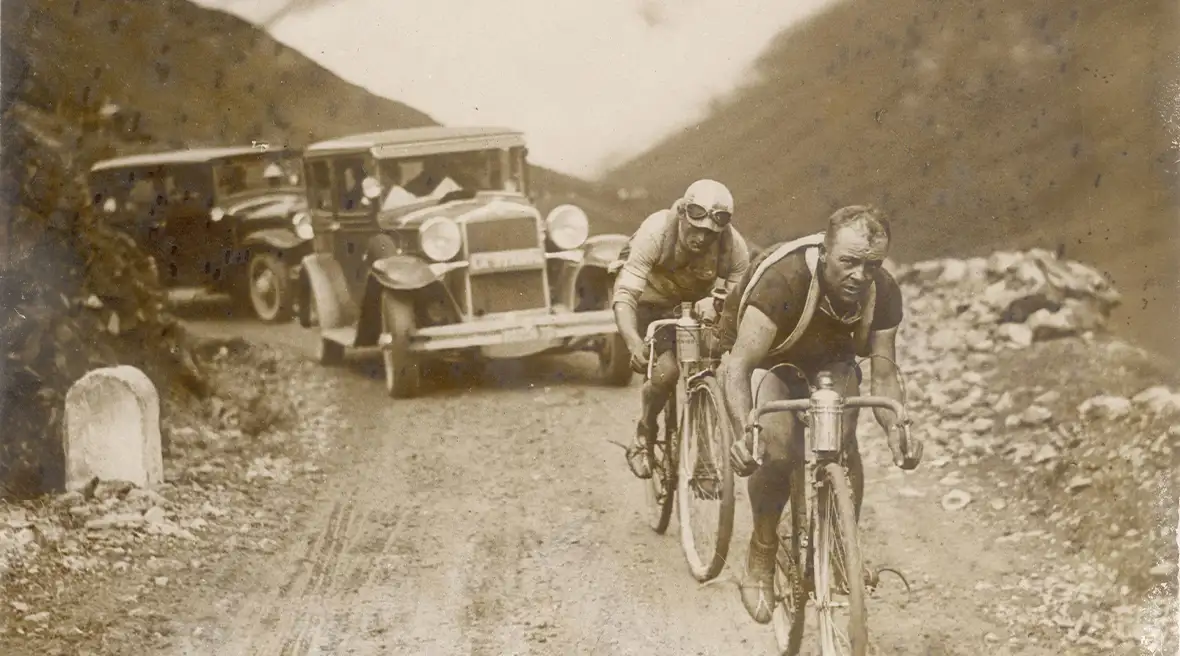
Géo Lefèvre, a cycling journalist with a dream, was the initial driving force behind the Tour de France. In 1902 he came up with the idea to boost the sales of the struggling newspaper L’Auto. The next summer a group of sixty cyclists set out onto the streets of Montgeron, attracting much attention and gathering a significant crowd of spectators. From this point on, the Tour de France was born and France became the focus of a global sporting spotlight every July.
Miguel Indurain, Jacques Anquetil, Bernard Hinault and Eddy Merckx currently hold the record for the highest number of yellow jersey wins, with five Tour wins each. The Isle of Man sprinter Mark Cavendish has the most stage wins, with 35.
How the Tour de France works
Learn all about the Tour de France – from its format and daily stages to stage types, teams, rest days and jerseys. Find out where the race starts and ends, how long it lasts, and the total distance cyclists must cover.
The race format and daily stages
The Tour de France is a multi-stage race spanning 3 weeks. It is made up of 21 stages - or 21 daily races - which include a mix of flat stages, mountain climbs and time trials. Each stage typically starts in the morning and finishes in the afternoon, followed by finish-line ceremonies and stage winner jersey presentations. The overall winner is the rider with the lowest cumulative time across all stages.
The Grand Départ - Where the Tour de France starts
In 2026, the Tour de France will begin in Barcelona, Spain.
The Tour de France organisers like to take the race beyond their own borders, and in recent years many different countries have hosted the Grand Départ, the opening stage with all its hype, fanfare and media attention.
The Netherlands was the first country outside France to have this honour in 1954, and subsequently Belgium, Germany, Switzerland, Luxembourg, Spain, Ireland, Monaco, the UK, Denmark and Italy have all launched the race.
Where the Tour de France ends
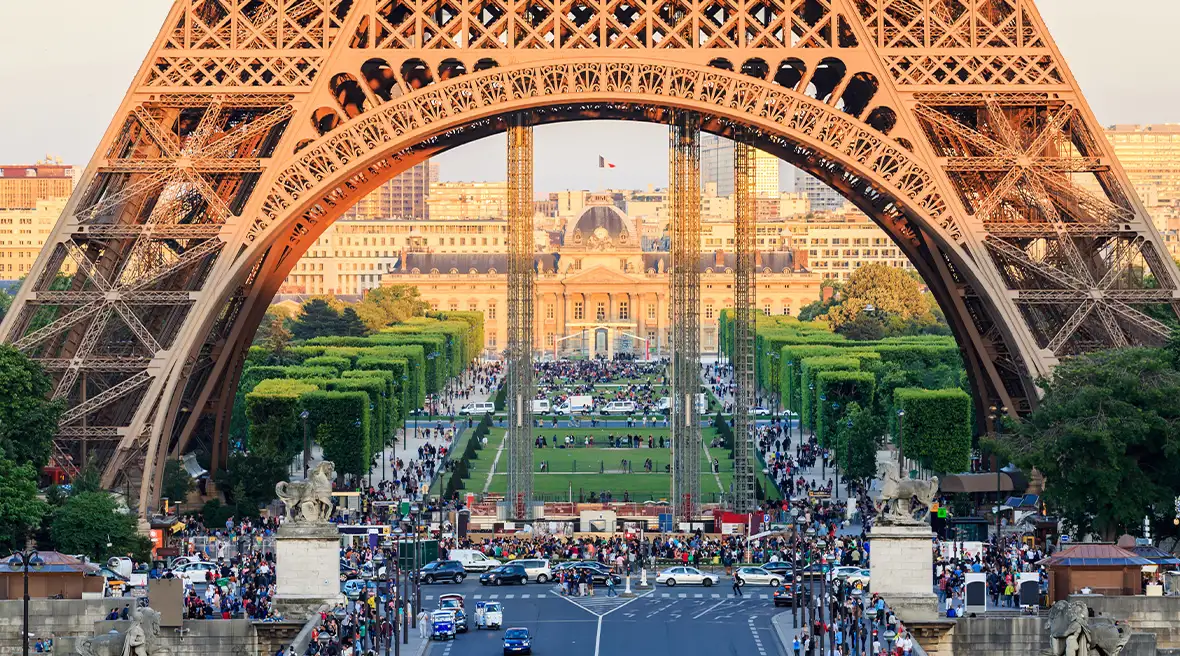 As the sun sets in Paris, the Tour comes to a thrilling end
The Tour de France traditionally finishes in Paris on the Champs-Élysées.
Once in the capital, the sprinters are back fighting for the final few points in the green jersey competition.
Although the route of the Tour de France varies each year, the final stage has always, with the exception of one year, been hosted by Paris. Climaxing along the Champs-Élysées, the finale has become a long standing French tradition, attracting huge crowds.
If you wish to be a part of this extraordinary experience, be sure to plan ahead in order to secure a good viewing spot – seats along the finish line can be very pricey, though you are certain to rub shoulders with some cycling royalty.
In 2024, for the first time in the Tour's history, the race finished in Nice, rather than Paris. This was because the capital city was preparing to host the Summer Games.
How far is the Tour de France?
The length of the Tour de France is typically around 3,500 km (2,200 miles), though the exact distance changes each year depending on the chosen route.
The different stage types
The Tour de France challenges riders across flat, hilly, and mountain terrains, putting both individual ability and team tactics to the test. The different stage types include: flat stages, hilly stages, mountain stages, the team time trial and the individual time trial.
Famous climbs and legendary stage locations
It is never easy to predict the decisive Tour de France stage when the eventual winner “breaks” the rest of the peloton and establishes himself as the leader. But usually it will be in the gruelling mountain stages. Some have become iconic, like Mont Ventoux and Alpe d’Huez. There is usually two or three of these classic climbs in each edition, and they draw cycling fans in huge numbers.
The mountain stages slow the riders down, sometimes almost to a standstill. Rather than seeing a blur as the peloton passes through a small village, if you stand in the right place you may be able to get a great photo of your favourite rider. But don’t get too close – there have been incidents when fans have caused riders to come off their bikes.
In order to watch the mountain stages it is important to arrive on the mountain-side well before the publicity caravans come by, as these treacherous roads usually close in plenty of time for safety reasons. The crowds here can be raucous, chaotic and well-lubricated!
Mont Ventoux
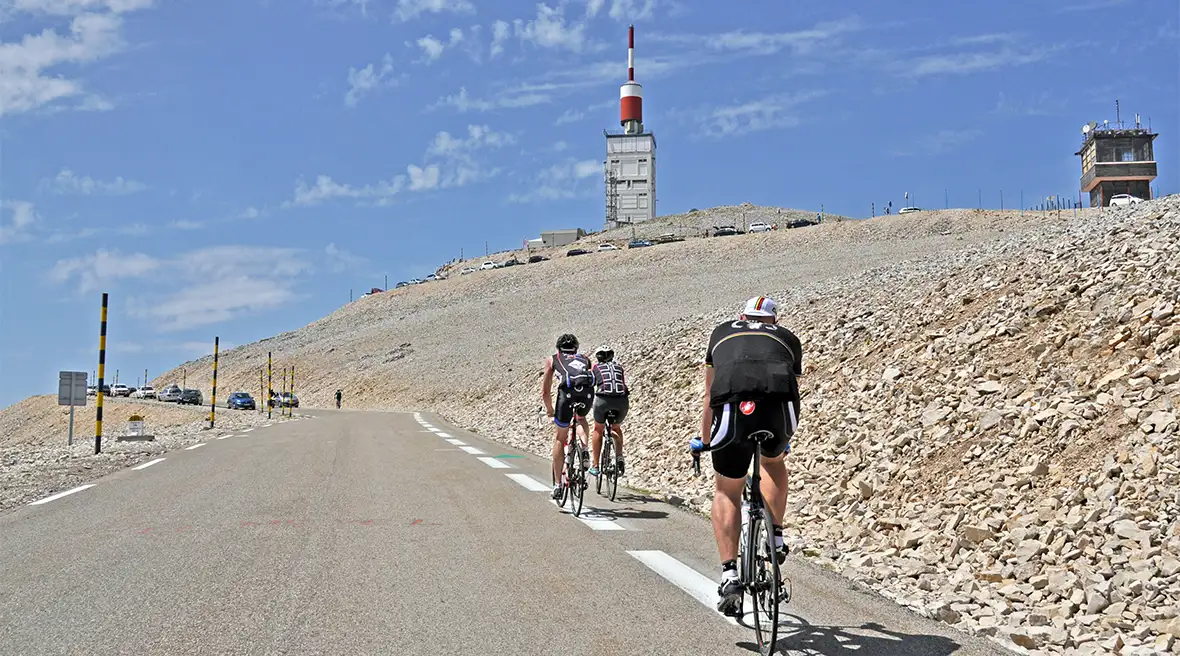
The ‘Beast of Provence’, the 1,909 metre Mont Ventoux has featured in the Tour eighteen times. The top of Ventoux is bare of vegetation, giving it a lunar-like feel, adding to its unique appeal as a mountain stage. With an average gradient of 7.43% on the 13.5 mile ascent from Bédoin, it is one of the most gruelling climbs in world cycling. High winds and extreme heat can make it treacherous. In 1967 Mont Ventoux claimed the life of British rider Tommy Simpson, who collapsed half a mile from the summit.
Alpe d’Huez
The Alpine peak of Alpe d’Huez has been called the ‘Mecca of cycling’. Its 21 bends act as staging posts up the nine mile long climb to the summit. The gradient reaches 13% at times. It was first ridden in the Tour in 1952 and is on the schedule regularly. Winning a stage at Alpe d’Huez is a career-defining achievement, and the bends on the climb are named after previous winners. Alpe d’Huez is a popular ski resort so travel links are good.
La Planche des Belles Filles
A relative newcomer to the Tour, La Planche des Belles Filles in the isolated Vosges mountains is already a firm favourite among cycling fans, and has featured numerous times since its debut in 2012. The brutal gradients of the 3.7 mile climb make for a punishing climax to a stage, with one section reaching 28% just before the top. You can drive to La Planche des Belles Filles from the LeShuttle Calais terminal in around six and a half hours via Reims (with tolls).
The teams and the competitions
Around 20 teams take part in the Tour de France, with 8 riders in each team. Most teams have a lead rider, with the rest of the team – the domestiques – working together for their benefit. Some of the leading current teams include Ineos Grenadiers and UEA Team Emirates XRG.
What do the different colour jerseys mean?
 The different Tour de France jerseys (Image credit: Leif Jørgensen, CC BY-SA 4.0, via Wikimedia Commons)
Jerseys are awarded throughout the Tour de France to riders leading key classifications.
The top endurance riders battle it out in the General Classification (GC), with the leading GC rider wearing the famous yellow jersey on each stage. There are also competitions for the sprinters, the best mountain climbers and the best young rider.
| jersey | classification | who wears it? | how it's earned |
|---|---|---|---|
| Yellow | General classification (GC) | Overall leader | Lowest cumulative time |
| Green | Points classification | Points leader | Points from stage finishes and intermediate sprints |
| Polka dot | Mountains classification | Best climber | Points from categorised climbs |
| White | Under 26 - General classification | Best young rider | Lowest cumulative time for riders aged under 26 |
Rest days and the individual time trials
There are two rest days on the Tour. For the riders it is a chance to let weary muscles recover; for Tour followers it can be a chance to explore more of France! Here is our guide to some of the best cycling regions in the country.
There is usually two individual time trials in every Tour, with the final one coming on the penultimate day of the official competition – which also marks the last chance for riders to stake their claim for the podium places.
Race tradition dictates that the GC leader on the final day goes unchallenged so that they and their team can enjoy the parade into Paris as a celebration for their hard work – and the riders on the winning team have been known to enjoy a glass of champagne as they pedal.
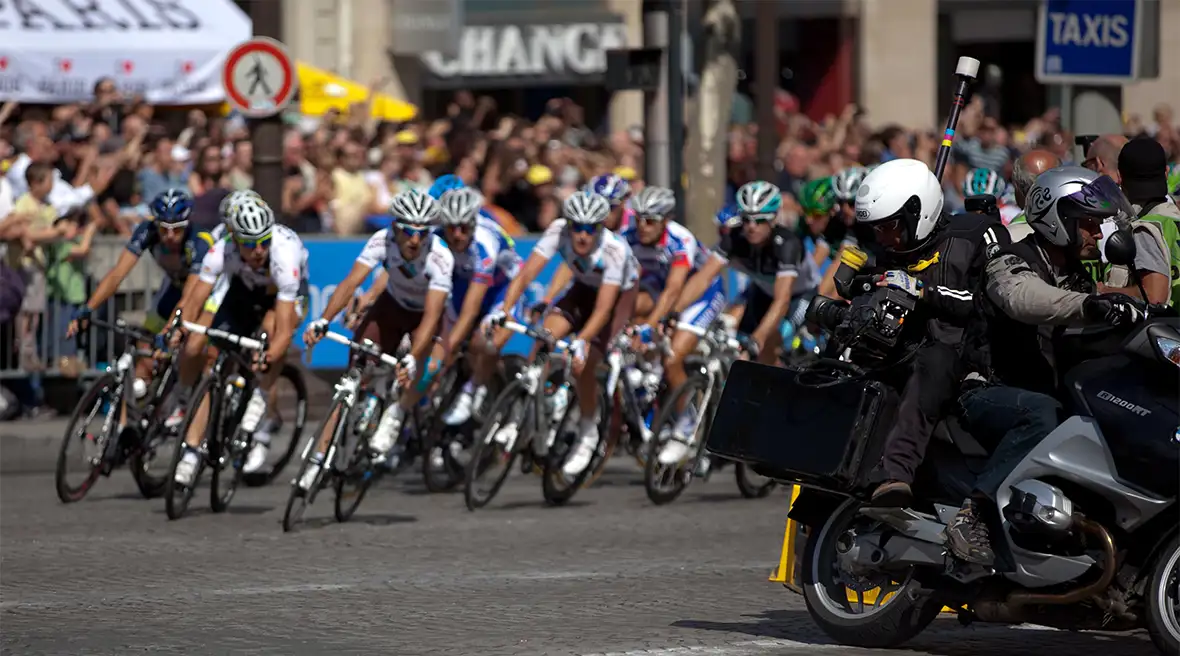 Towns come to a standstill when the peloton swings through!
See the Tour de France in person
Find everything you need to plan a trip to see a stage of the Tour de France.
Drive to France for the Tour de France
Whether you’re heading to Paris for the final stage or following a mountain climb, planning your route and travel time is key. Plan your drive in France by checking popular spectator destinations along the Tour de France route, with approximate driving times from Calais below:
- Paris: 3½ hours
- La Planche des Belles Filles: 7 hours
- Alpe d’Huez: 9 hours 30 minutes
- Mont Ventoux: 10 hours 30 minutes
Other French cities passed on the 2026 route include:
- Pau
- Bordeaux
- Bergerac
Watch a Tour de France stage - Top tips
Make the most of the experience with these practical tips:
Plan ahead
• Book accommodation early, especially for mountain stages, as they fill up quickly.
• Check the official route for the year to know where each stage passes.
• Choose stages wisely. Mountain stages offer dramatic scenery but are busier; flat stages are usually easier to access.
• Visit stage starts for the best photo and autograph opportunities.
Manage your travel and arrival
• Check road closures before heading out.
• Plan your journey in advance to give yourself plenty of time.
• Use public transport or cycle from your accommodation to the stage to make arrival easier.
Pack essentials
• Dress for the weather and wear layers and waterproofs if needed.
• Bring snacks, water, and sunscreen to stay comfortable during long waits.
Cycle parts of the Tour de France route
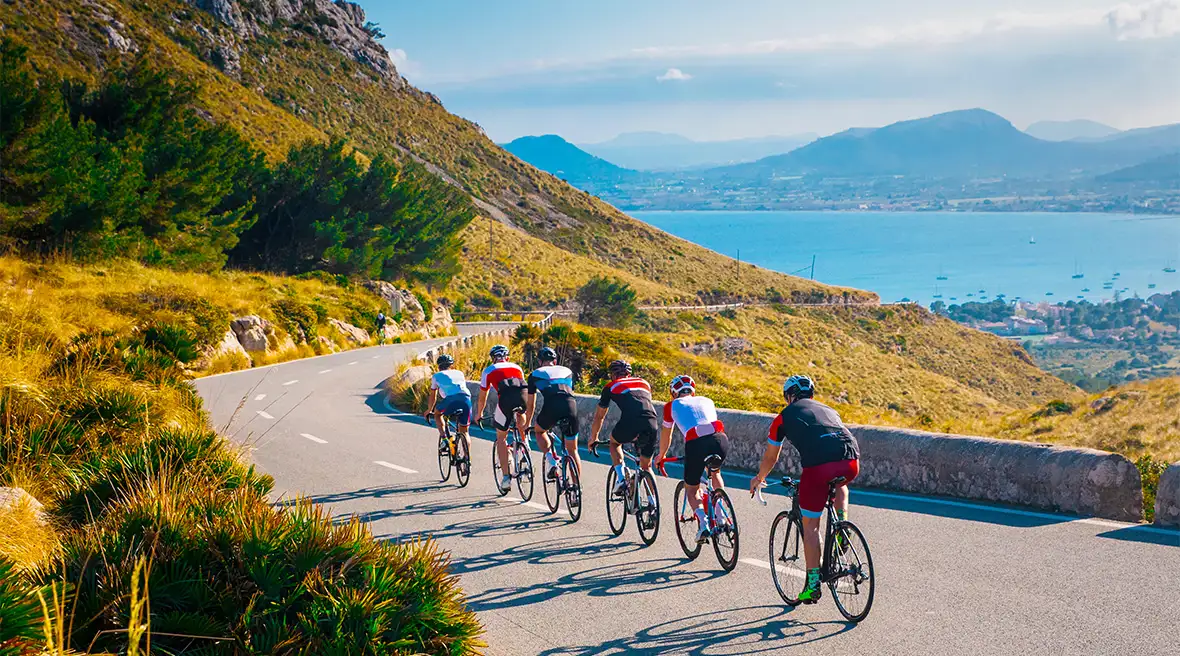
Riding the Tour route is on the bucket list of many amateur cyclists. It is possible, too, with the race taking place on public roads. You can book a tour with a travel company, and there are holidays available where you ride the route 24 hours before the Tour itself comes through. Or just do it yourself.
If you are taking your bike and watching the Tour at the same time, however, be prepared for road closures well in advance. Plus, it goes without saying that to attempt some of the mountain sections at any time of the year, you will have to be a strong cyclist.
Experience Le Tour with LeShuttle
For cycling enthusiasts wishing to follow the race, the Tour de France is closer than you think, with the crossing on LeShuttle lasting just 35 minutes.
Of course, there are more leisurely ways to see France by bike. Why not cycle in the Loire Valley or ride the 1,500km La Vélomaritime from Dunkirk to Roscoff?
Join Club LeShuttle