Discover the charm and liveliness of Breda in the Netherlands

Explore this delightful Dutch city, well known for history, art and culture.
Take a city break in Breda, a lesser known Dutch gem only a short drive from Calais.
Why visit Breda?
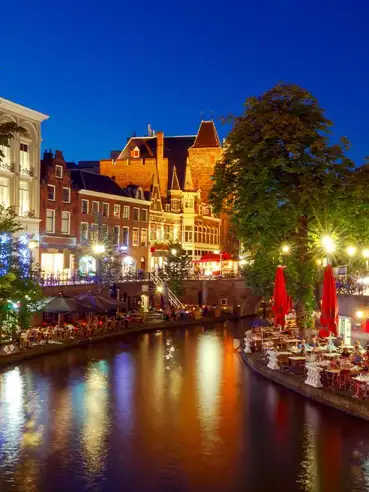
 Breda has a picturesque old town encircled by canals
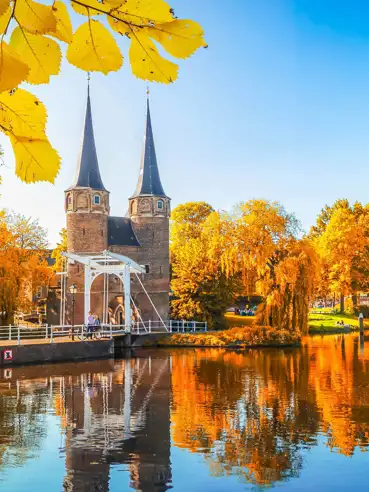
Less than three hours from Calais, Breda in North Brabant is one of the closest cities in the Netherlands to our French LeShuttle terminal. It’s distinctively Dutch, with canals, historic architecture and an unspoilt old town. You’ll love the vibe of the city, which is laid-back and friendly. Visiting in spring sees Breda at its most colourful, with tulips in every window box. King’s Day, in late April, sees the city celebrate its royal connections.
What is Breda best known for?
Breda is steeped in history. It is perhaps most famous for being the city where the English king Charles II, exiled from England during the republican rule of Oliver Cromwell, spent some time. The Declaration of Breda, Charles’s terms for restoring the monarchy in England, was signed here in 1660. Buildings like the Grote Kerk, the Castle and the Begijnhof is where this history comes most alive. Breda is also the city where the Dutch royal family have their roots, and there are reminders everywhere about the power and influence of the Nassau dynasty. While history runs deep, Breda is also a very modern city, brimming with street art and café culture.
The best things to see and do in Breda
 The Grote Kerk is the most iconic building in Breda
Grote Kerk – climb the tower for incredible views
The Grote Kerk, or ‘large church’, is definitely the most impressive building in Breda, designed in a distinctive white Brabantine Gothic style. The building dates back to the early 15th century, and for a time was a place of pilgrimage. Like many Dutch churches it was stripped of much of its decoration in the Reformation, but still retains some outstanding features, like the Prinsenkapel, with its gold leaf ceiling, the stained glass windows and the tombs of the ancestors of the Dutch royal family, the House of Orange-Nassau.
Entry to the church is free, but for €10 you can climb the 287 steps to the top of the tower with a guide. The tower walk is only available on Thursdays, Fridays and weekends at 2pm and 3pm.
The Begijnhof – historic enclave where silence still reigns
 Step back in time into the Begijnhof
Like many cities in the Low Countries, from Bruges to Amsterdam, Breda has a Begijnhof – a historic area where a community of single women called ‘Beguines’ lived. The Beguine were not nuns but they lived a religious life, devoted to charity and good works. The Begijnhof in Breda is a tranquil enclave of cottages, gardens, courtyard and a church, and the houses are still only allowed to be occupied by single women. You are free to walk into the Begijnhof, through the gatehouse on Catharinastraat, but are asked to remain silent while you do so. You will often see nuns with their distinctive blue habits – a nunnery was established in the old Novice House within the courtyard.
There is a museum in one of the houses, open on Thursdays, Saturdays and Sundays from May to October.
Castle of Breda – Nassau fortress, Charles II’s exiled home
The Castle of Breda is actually a Renaissance palace, built on the site of a 12th century castle. It was one of the main residences of the Nassaus, who hosted grand state occasions here. History lovers will know it as the place where Charles II stayed during his exile in Breda, and where the Treaty of Breda was signed in 1667, marking the end of the Second Anglo-Dutch War.
The castle is a military academy, so is not generally open to the public, but there are guided tours of the castle and the grounds every Saturday, at 2pm. The tours must be booked in advance and cost €10.
Valkenberg Park – Breda’s biggest public park
 See the lighthouse from across the water in Valkenburg Park
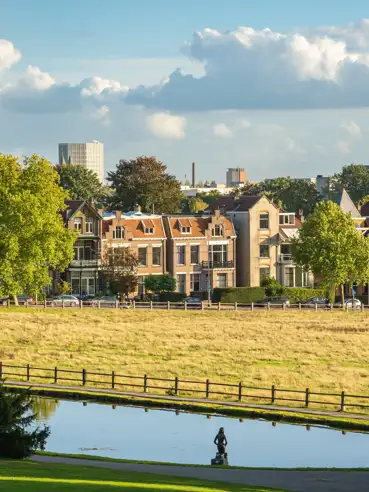
The largest green space in Breda was once the private gardens and park of the Castle, only accessible to its residents and guests. Happily that is no longer the case, and the people of Breda flock to Valkenberg Park, especially in the spring and summer. It’s a great place for a picnic, to walk the dogs, keep fit and for families to enjoy some quality time, but there’s plenty of history here too. Statues remember events like the early days of
World War II, when many Breda citizens fled the city.
The T-Huis is the park’s café, serving hot and cold drinks, snacks and lunches. Guided tours of the Castle begin at the Nassau monument in Valkenberg Park. One of the sights to look out for from the park is the ornamental lighthouse, which has stood across the river since 1992.
Café culture and street art – the real Breda
 The ‘Blind Walls Gallery’ brings colourful murals to Breda’s buildings
Cobblestones and pavement cafés – Breda revels in café culture. The Grote Markt and the surrounding streets are full of places to eat and drink, with the cobbles packed with al fresco seating. This is the heartbeat of Breda, where you can nurse a coffee or a beer and watch the world go by, hear the conversations of ‘Bredanaars’ and make friends with the locals.
The streets of the city are also where you’ll find the ‘Blind Walls Gallery’ – a street art project which has seen over 100 murals painted onto walls by artists from all over the world. Each location is carefully researched by the artist, and each piece of art has an interesting story attached to it. From giant butterflies on an apartment block to a digital update of a Hieronymus Bosch masterpiece on the side of a municipal car park, these walls really do talk.
Stedelijk Museum – discover the history of the Nassau dynasty
In the city museum you’ll find a fascinating exhibition about how the Nassau family helped shape the history of Breda and the Netherlands. The man considered the founder of the Dutch state – William the Silent – was a member of the Orange-Nassau dynasty. Their story is told through works of art, objects and documents, including a city view of Breda from 1520, the oldest known painting of a Dutch city. Many interesting tales emerge, such as when Breda, then under Spanish rule, was captured by a handful of Dutch and English soldiers hiding in a barge of peat.
Elsewhere in the museum there are exhibitions of contemporary art, photography and displays of art with special significance to the city.
Drive from Calais to Breda
It’s only a drive of around 2 hours 50 minutes to Breda in North Brabant from the LeShuttle terminal in Calais. You’ll drive on the A16, E40, E17 and E19 motorways through France, Belgium and the Netherlands. There are no tolls to pay, as Belgium and the Netherlands do not have nationwide road tolls.
Explore Breda in Brabant with LeShuttle
Breda is a Dutch city you’ll absolutely love visiting. Remember it’s just a 35-minute crossing on LeShuttle!
FAQs
Is Breda worth visiting for a weekend break?
Yes, Breda is a great idea for a city break. It’s a small city, so you’ll see everything you want to in a weekend.
What are the best things to do in Breda in one day?
If you only have one day in Breda, make sure you visit the Grote Kerk, the Castle and the Begijnhof. They’re all close to each other in the old town, and you’ll learn a lot about the history of the city.
Where can you park in Breda if you’re driving?
There are numerous underground and multi-storey car parks close to the city centre, as well as park and ride facilities, such as at the central railway station.
How long does it take to drive from Calais to Breda?
It’s a drive of less than 3 hours to Breda from the LeShuttle terminal in Calais.