
The best opera houses in Europe
.jpeg?width=1536&height=824&rmode=crop&format=webp&quality=60&v=202509101555)
Opera houses are incredible places to visit, whether you see a performance or not. Here’s our guide to the best in Europe.
Whether you are an opera aficionado or the closest you’ve come to an opera house is watching the 2004 film of Phantom of the Opera with Gerard Butler, Europe’s opera houses are an unmissable destination for any lover of music, history, and art.
Why visit opera houses in Europe?
Visiting opera houses in Europe is about so much more than just watching a performance – and with the opulent sets, exquisite costumes, and extraordinary voices – that alone would be reason enough! But the best opera houses in Europe are also windows into European history and musical tradition. Oft described as ‘living museums’, opera houses are a unique way to experience a city’s past. Lavish interiors decorated with grand staircases, ornate carvings, murals, and sculptures are bound to leave architecture fans in awe, while historical performances will leave culture fans mesmerised.
Once symbols of a city’s wealth, the vast majority of Europe’s opera houses are found in city centres, making them ideal for city breaks and easy to combine with other cultural experiences. Better still, with many opera houses offering behind-the-scenes tours, public rehearsals, and workshops, you don’t have to attend a performance to enjoy these landmarks.
Whether you visit to enjoy the architecture or a world-class performance, you may find yourself applauding and crying ‘Bravo!’ before the curtain even rises.
How to Drive to Europe’s Opera Houses from Calais
Driving to opera houses in Europe is easy with LeShuttle. With crossings taking just 35 minutes, and the closest opera house only 3 hours and 20 minutes from our Calais terminal, you’ll be immersing yourself in timeless operatic scores in no time.
Check the rough times and distances from our Calais terminal to each opera house:
| Calais to… | Distance | Driving Time |
| Opéra Bastille | 181 miles/ 291 km | 3 hr 20 |
| Palais Garnier | 178 miles/ 287 km | 3 hr 45 |
| Zurich Opera House | 527 miles/ 848 km | 8 hr 45 |
| La Scala | 679 miles/ 1,093 km | 11 hr 35 |
| Arena di Verona | 733 miles/ 1,180 km | 13 hr |
| Copenhagen Opera House | 679 miles/ 1,093 km | 13 hr 40 |
| Wiener Staatsoper | 851 miles/ 1,370 km | 13 hr 50 |
| Teatro di San Carlo | 1,118 miles/ 1,800 km | 18 hr 25 |
A grand tour of Europe’s most famous opera houses
Step inside some of Europe’s most iconic opera houses and discover the grandeur, history, and artistry that makes them must-see destinations.
Wiener Staatsoper, Vienna – The heart of classical Europe
There's something bold and uncompromising about Austria, and it certainly shines through when looking at the Vienna State Opera. This imposing, bulky building was hated by the public when it first opened, so when American bombs burnt most of it down, you might imagine that it moved. Of course not! The unpopular opera was recreated down to the last stone, and today the Viennese have learnt to love it. Ideal for a passing visit, the Staatsoper often has standing tickets available just minutes before a performance, and its selection of operas, ballets, and so on aimed at children is among the best in Europe.
 Experience the magic of the Vienna State Opera at night.
Teatro di San Carlo, Naples – Europe’s oldest opera house
Built by a king of Naples as the jewel in his crown, the Teatro di San Carlo is the oldest continually operating opera house in Europe. Opened in 1737, nothing has been able to slow its output - not even the Second World War. The Allies bombed the Teatro, but reopened it just three weeks after seizing Naples (and won themselves a lot of new allies in the process). After extensive renovation in the early 21st century (you'd never know she was nearly 300!), the Teatro offers a wide variety of opera and ballet from November to July.
La Scala, Milan – Italy’s most iconic stage
One of the most prestigious opera houses in the world, La Scala in Milan is famous for its architectural beauty and rich musical heritage. Inaugurated in 1778, the opera house has premiered masterpieces by composers like Verdi, Puccini, and Rossini. Opera-goers visiting La Scala have a reputation for high standards, and they are not shy about showing their appreciation - or their disapproval. A standing ovation on this stage can be a career highlight for a performer! This tradition of passionate, critical listening has shaped La Scala’s status in the opera world.
At the same time, to make opera more accessible and attract a younger audience, La Scala runs the “Great Performances for Children and Families” project, offering child-friendly productions for just 1 euro per child.
 Feel the grandeur of La Scala in Milan.
Arena di Verona, Verona – Opera beneath the stars
Although not an opera house in the proper sense of the word, the Arena holds an irresistible attraction for those who love opera's tangible connection to history. An open-air theatre housed in a genuine Roman amphitheatre, it attracts more than half a million visitors a year for performances of popular operas as well as contemporary music performances and rock shows. A wonderful choice for those who want an introduction to the pageantry and spectacle of opera.
Palais Garnier, Paris – The phantom’s home
Just 3 hours and 45 minutes from our Calais terminal, Palais Garnier is the theatre house that inspired the story of The Phantom of the Opera. Those familiar with Andrew Lloyd Webber’s famous musical may already picture opulent marble staircases, plush red seating, gilded decoration, and, of course, magnificent chandeliers - and they wouldn’t be wrong. The ornate opera house is lavishly decorated and steeped in spooky legends of ghosts, skeletons, and even a real incident involving a chandelier crashing to the ground. It was also one of the first theatres in the world to be lit by electricity, all of which makes Webber’s opening line and the famous chandelier-rising scene in The Phantom of the Opera particularly apt:
“Perhaps we can frighten away the ghost of so many years ago with a little illumination!”
 Step inside the opulent Palais Garnier and experience Parisian grandeur.
Opéra Bastille, Paris – Contemporary opera in a monumental setting
Built in a dramatic modern style, the Opéra Bastille has never been home to a phantom or theatrical ghost, like the Palais Garnier. However, the Paris National Opera is now largely based at the Opéra Bastille, which was opened in 1989. The acoustics are as finely crafted as the opera house itself, and the bold style makes it a wonderful place to watch classic and contemporary performances.
Copenhagen Opera House – Scandinavia’s cutting-edge stage
Home to the Royal Danish Opera, Copenhagen Opera House hosts world-class opera, ballet, and symphonic performances. Opened in 2005, it is one of the newer opera houses in Europe, and its design reflects this with a strikingly modern aesthetic. While modern, the opera house is no less opulent – in fact, the auditorium ceiling is lined with around 105,000 sheets of 24-carat gold leaf – that’s 1.5kg of gold!
Opposite Amalienborg Palace, the official residence for the Danish royal family, and near Copenhagen harbour, the opera house is perfectly positioned in the heart of the city, with beautiful views of the waterfront.
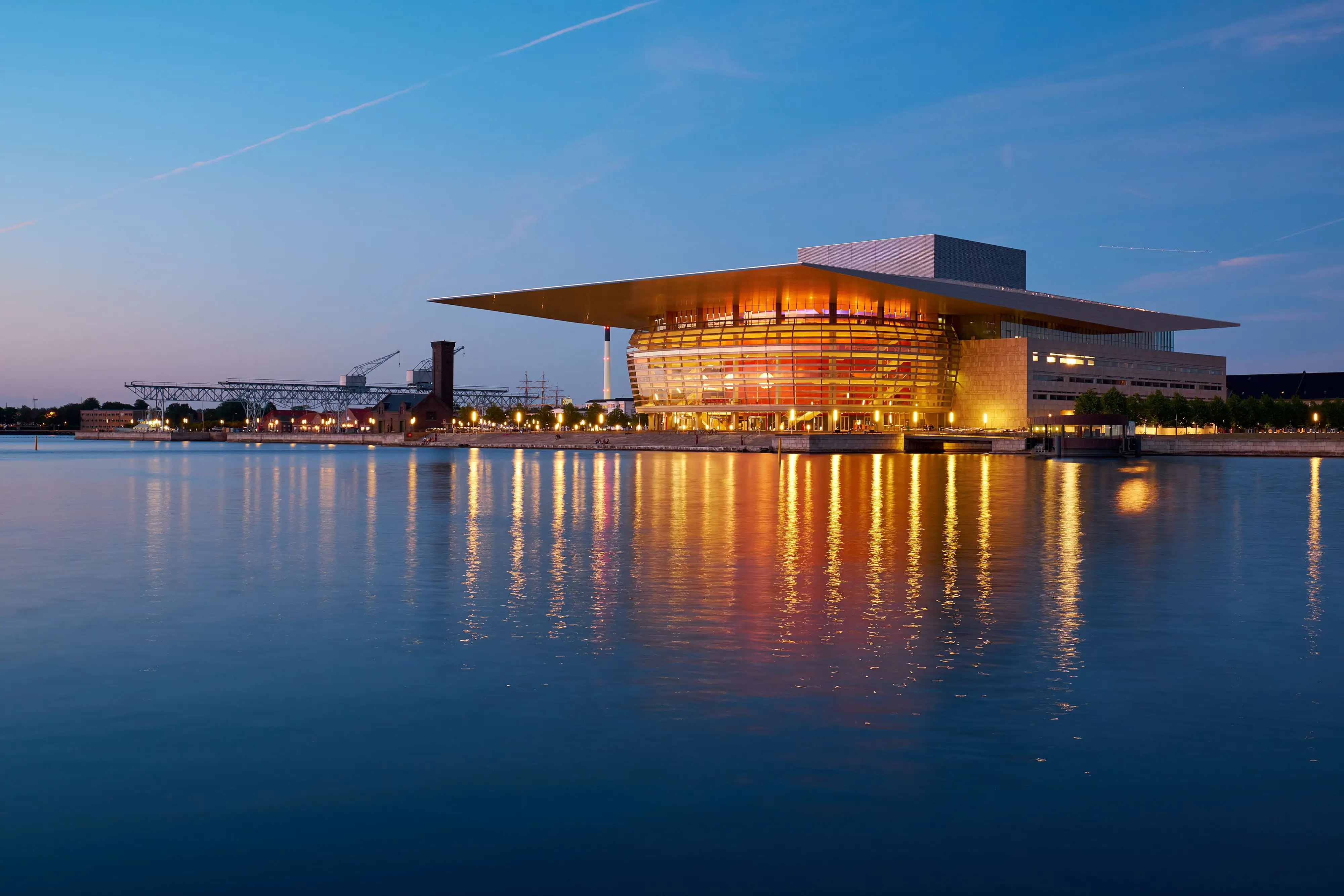 Discover world-class music by the water in Copenhagen.
Zurich Opera House, Zurich – World-class opera with a view
One of Zurich’s most famous landmarks, the Zurich Opera House showcases a diverse programme of events, from historical premieres to modern concerts, open-air performances, family-friendly shows, and song recitals. Initiatives such as ‘Opera for All’ and ‘Ballet for All’ bring together both seasoned opera fans and newcomers of all ages.
With seating for just 1,100 spectators, the venue has a more intimate feel than some of the larger opera houses in Europe.
Other cultural experiences opera lovers will enjoy
Opera lovers will find plenty of cultural experiences to pair with a visit to an opera house in Europe, from museums and art galleries to festivals and fine dining. If you’re visiting Paris, be sure to check out cultural gems like The Louvre and the Champs-Élysées. The Kunsthaus museum in Zurich and the National Gallery of Denmark in Copenhagen are unmissable for art fans. In Italy, you’ll find the Museo Teatrale alla Scala, a museum dedicated to the history of La Scala and opera, as well as landmarks like Duomo di Milano and Verona Cathedral.
Raise the curtain on your next European getaway
Make sure your European opera house getaway strikes the right chord! With LeShuttle, you can cross the channel in just 35 minutes, and from the comfort of your car, you can hum your favourite arias all the way there!
FAQs
Ready to plan a trip to Europe’s best opera houses? Our FAQ section will help you fine-tune your cultural itinerary.
What is the most visited opera house in Europe?
It’s hard to definitively say which opera house is the most visited in Europe, but a strong contender is the Vienna State Opera. The venue has 1,709 seats and makes opera more accessible through free outdoor screenings and affordable standing tickets.
Can you tour Europe’s opera houses without seeing a performance?
Yes! Lots of European opera houses offer guided and behind-the-scenes tours. This is a great way to experience the grandeur of the building even if you’re not attending a performance.
Do opera houses in Europe have dress codes?
Dress codes are increasingly relaxed, but it is worth checking with individual opera houses to understand their rules around attire. Generally speaking, shorts, tank tops, and flip-flips will not be allowed. Lots of patrons use an evening at the opera as a wonderful excuse to dress up, so expect to see black-tie suits, elegant gowns, and stylish outfits.
Which is the grandest opera house in Europe?
It’s hard to say which opera house is the grandest. As one of the most opulent opera houses in Europe, Palais Garnier might take the title, but La Scala is famed for its acoustics, Teatro di San Carlo is known for its rich history and Wiener Staatsoper for its stunning architecture. So deciding the grandest opera house in Europe might come down to what takes your breath away the most!
What makes La Scala in Milan so famous?
With a reputation for unmatched acoustics, historic premieres, and legendary performers, it is unsurprising that La Scala in Milan is known as one of the most famous opera houses in Europe. It’s also frequented by some of the most discerning opera audiences, and a standing ovation here is considered one of the highest honours in the world of opera.


.jpeg?width=369&height=492&rmode=crop&ranchor=center&format=webp&quality=60&v=202501201045)