Driving to Germany from the UK
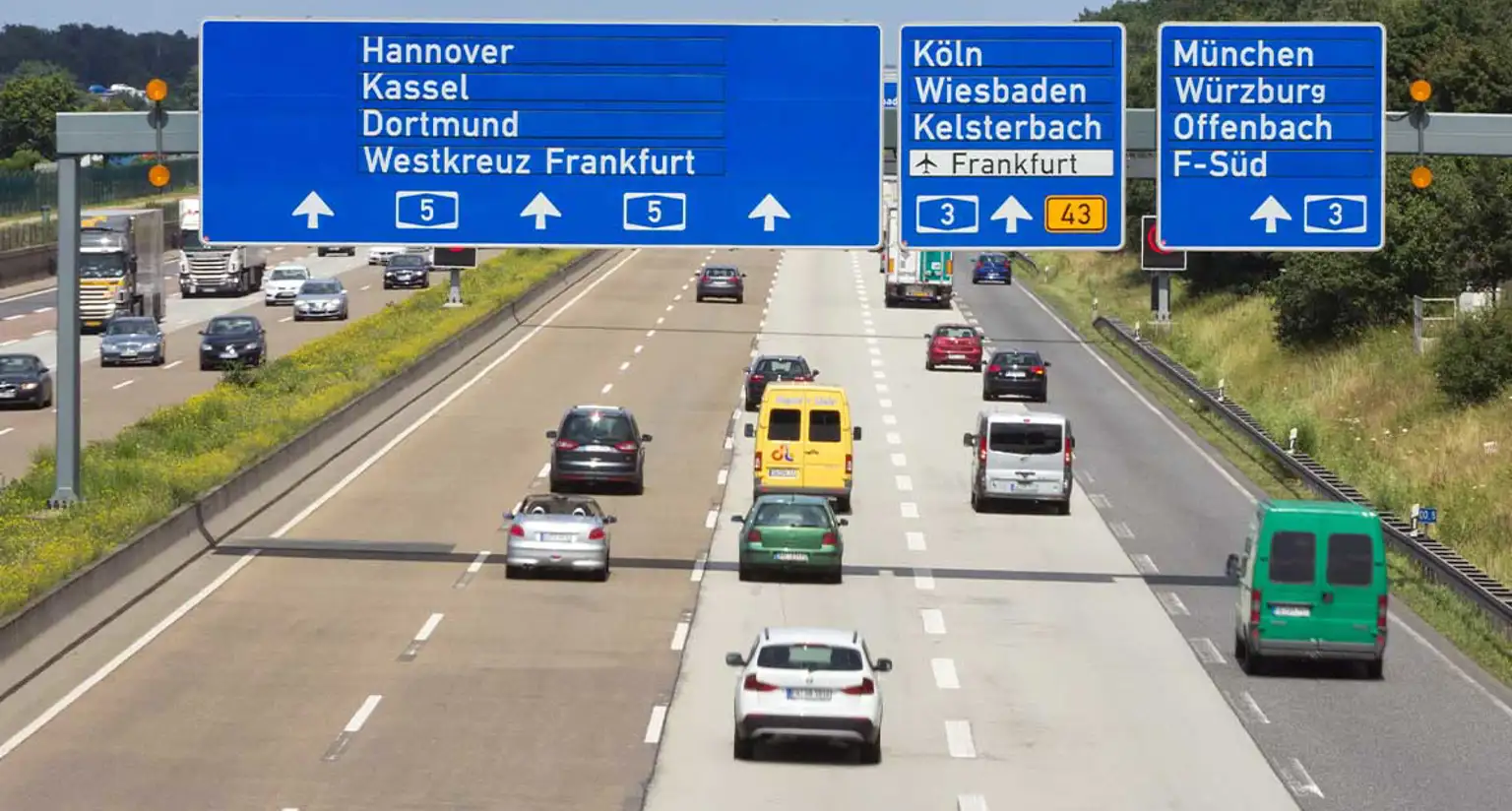
Cities like Cologne and Düsseldorf are only a few hours drive from Calais. Here’s all you need to know about a road trip to Germany.
LeShuttle is truly the gateway to Europe – when you leave our terminal at Calais you are not only on the doorstep of Belgium and the Netherlands, but Germany is only a few hours drive away.
Yes, Germany – with its stunning architecture, fairytale castles and majestic landscapes, so close you could be there by lunchtime!
Driving to Germany from the UK: key facts at a glance
| Distance from Calais to Germany | 3 hours 40 minutes (closest German city to Calais) |
| Are there border checks? | No. None within Schengen area |
| What tolls to pay? | There are no motorway tolls in Germany |
| What documents do I need? | Driving licence, passport, motor insurance certificate, V5C |
| Speed limits | Autobahn: no fixed speed limit (recommended limit: 130 km/h) 100 km/h outside built-up areas 50 km/h urban areas |
| Best route from London to Germany | M20 to Folkestone LeShuttle to Calais A16 through northern France, E40/E17/E34 through Belgium, and A67 through the Netherlands |
Preparing for your journey to Germany
Do all the normal checks on your car you would before any long drive – oil, screen wash, tyre pressure and depth, amongst others. Make sure you are equipped with everything you might need in an emergency, such as a working torch and extra supplies of food and water. The following emergency items are mandatory in Germany –
- Warning triangle
- At least one hi-vis safety jacket
- First aid kit
What is the best driving route from Calais to Germany?
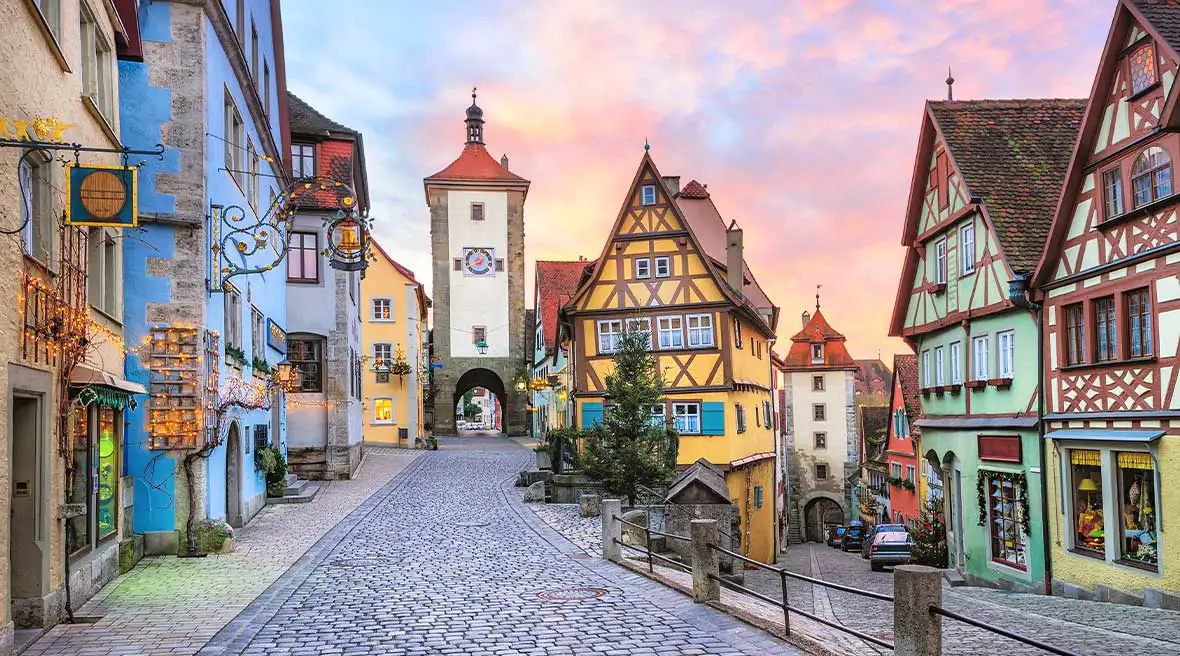
It really depends where you are driving in Germany. The quickest route is via the E40 and E17 motorways through northern Belgium, and the A67 through the southern Netherlands. This takes you into the state of North Rhine-Westphalia, ideal for travelling to Düsseldorf and other cities like Duisburg and Essen. Driving to Düsseldorf from the LeShuttle terminal at Calais only takes just over four hours.
But if you preferred a German destination further south, like Trier in the Moselle Valley, your best route is via Lille in France and then a route through Wallonia in southern Belgium. You’ll cross Luxembourg before finally reaching the German border and the enchanting Roman city of Trier. This route may seem like a long distance, but it will actually only take under five hours driving time.
How long does it take to drive from Calais to Germany?
So many wonderful German cities are within a short driving distance of our terminal at Calais. The Rhine valley is the most populous area of Germany, full of memorable places to visit – Cologne, Düsseldorf and Bonn are all under five hours away. Here are the driving times and distances to some popular German cities within a day’s drive of Calais:
| City | Distance from Calais | Driving Time |
| Aachen | 218 miles/351km | 3h 40m |
| Düsseldorf | 249 miles/401km | 4h 30m |
| Cologne | 260 miles/419km | 4h 50m |
| Bonn | 267 miles/430km | 4h 50m |
| Dortmund | 272 miles/438km | 5h 20m |
| Frankfurt | 369 miles/595km | 6h 45m |
| Heidelberg | 420 miles/677km | 6h 40m |
| Hamburg | 474 miles/763km | 8h 45m |
| Nuremberg | 503 miles/811km | 9h |
| Leipzig | 530 miles/854km | 9h 30m |
| Berlin | 577 miles/930km | 10h 30m |
| Munich | 602 miles/970km | 10h 30m |
| Please note: These distance and driving times from Calais are approximate and given as guidance only. | ||
What documents do I need to drive from the UK to Germany?
These are the documents you should carry with you in your car at all times while driving in Germany:
- A full valid UK driving licence
- Passport
- Evidence of insurance cover
- V5 (logbook)
You will need to have European breakdown cover in place. A policy provides roadside assistance should you break down in Europe, and English-speaking customer phone support.
Can UK drivers legally drive in Germany?
Yes, as long as you have a valid UK driving licence, you are allowed to drive in Germany. You should make sure you have European breakdown cover in place, and the UK identifier on your registration plate or a UK car sticker.
Is it easy to drive to Germany from the UK?
Yes, if you are an experienced driver in Europe, your road trip to Germany should not pose too many problems. The quickest route from Calais is along the A16 coast road. Within an hour you are across the border, so here are some tips on driving in Belgium. You may have a short section in the Netherlands, but within around four hours you will be driving in Germany.
German roads are among the best maintained in Europe. The Autobahn network is toll-free and usually free flowing. It has a reputation for speed, so keep to the right hand (slow) lane where possible. As long as you respect the speed limits you will enjoy driving from France to Germany.
Are there toll roads when driving in Germany?
No, roads in Germany do not generally charge tolls, as long as your vehicle weighs under 7.5 tonnes – but there are a handful of individual road tunnels which do require a toll.
What if I break down while driving in Germany?
If you’re unlucky enough to have an accident or your car breaks down in Germany, the important thing is not to panic. On the autobahn there are emergency telephones at 2km intervals. They will either have a button to ask for roadside assistance or a button to request an ambulance, or you will be put through to a call centre. You will be able to speak to an operator in English.
If you break down on other types of roads in Germany, try to make sure your car is in a safe location before putting out your warning triangle. If you leave the vehicle wear your hi-vis jacket. You should contact your breakdown cover company as soon as possible and wait for their instructions.
What is the speed limit in Germany?
On most of the Autobahn there are is no fixed speed limit. You will know when you are driving in a section like this when you see a round white sign with five diagonal black lines across it. The recommended speed limit on the Autobahn is 130 km/h. Around 30% of the Autobahn will have enforced speed limits. You can be fined if you are caught exceeding the speed limit by less than 10 km/h. There are also minimum speed limits on six lane roads in Germany - 60 km/h for the slow lane, 90 km/h for the middle lane and 110 km/h for the fast lane.
What are the speed limits on other German roads?
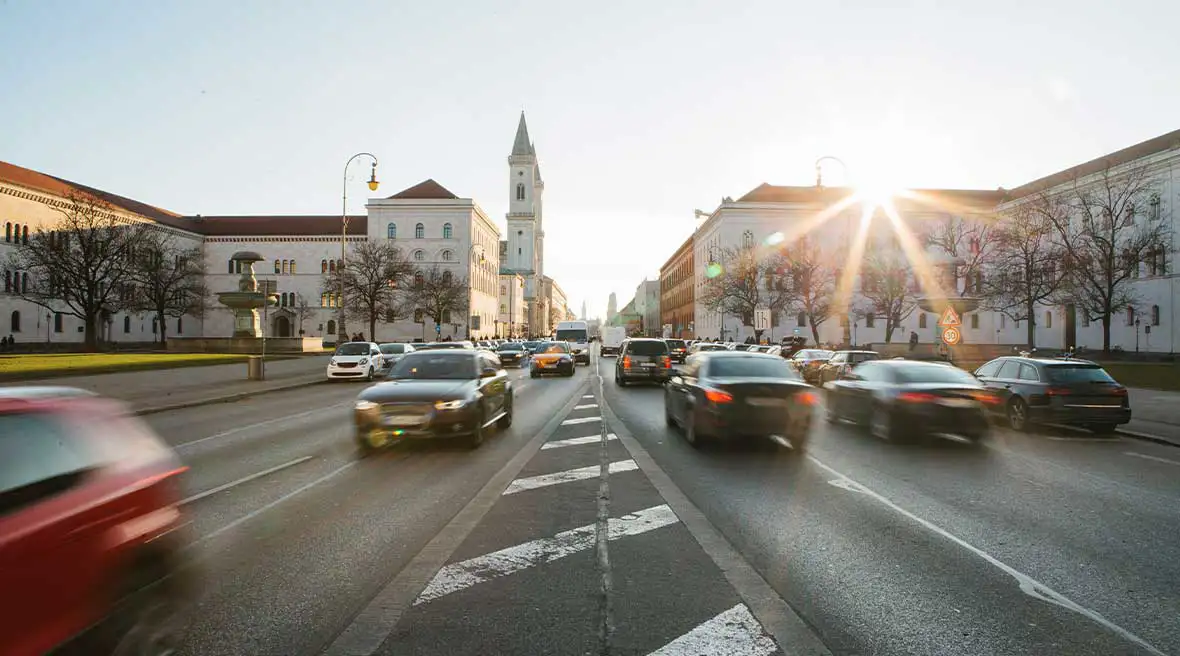
Of course, you won't always be driving on the Autobahn. There are speed limits on other types of German roads that you will need to observe:
- Non-urban roads - 100 km/h
- Towns and cities - 50 km/h
- Some specific urban roads - 30 km/h
Where should I park in Germany?
The best way to get about towns and cities in Germany is via the very efficient public transport network. In most cities there will be park and ride facilities, usually near railway stations or bus terminals. If you have a UK Blue Badge, these are valid in Germany, so drivers and passengers with restricted mobility can still make use of disabled parking bays within urban areas.
Can I charge my electric vehicle in Germany?
Yes, Germany has developed a very large network of public electric charging stations. If you are driving your EV to Germany from the UK, you will find the Autobahn, towns and cities have plenty of ultra fast charging points, enabling you to charge your vehicle quickly for long distance driving. The carbon levy that Germany charges makes petrol and diesel pump prices more expensive than elsewhere in Europe, so there are considerable advantages to driving a zero emissions vehicle in Germany.
 Germany is well served with public EV charging points
Do I need an emissions sticker in Germany?
Yes, drivers will need a green emissions sticker if they are entering most German cities. These low emissions zones are called 'Umweltzonen'. Before travelling to Germany you will need to check if your vehicle reaches the minimum standard. Petrol cars should meet the Euro 1 emission standard and diesel cars and vans the Euro 4/IV emission standard (Euro 3/III if fitted with a diesel particulate filter).
The Umweltplakette badge costs between €17.50 and €33 and is available online or from most authorised garages and service stations in Germany. You must stick it to the inside of your windscreen (like the old road tax disc). It does not have to be renewed. You could be fined up to €100 if you do not display the sticker. Some German cities have banned certain types of diesel vehicles - again, check before you travel.
The benefits of driving to Germany
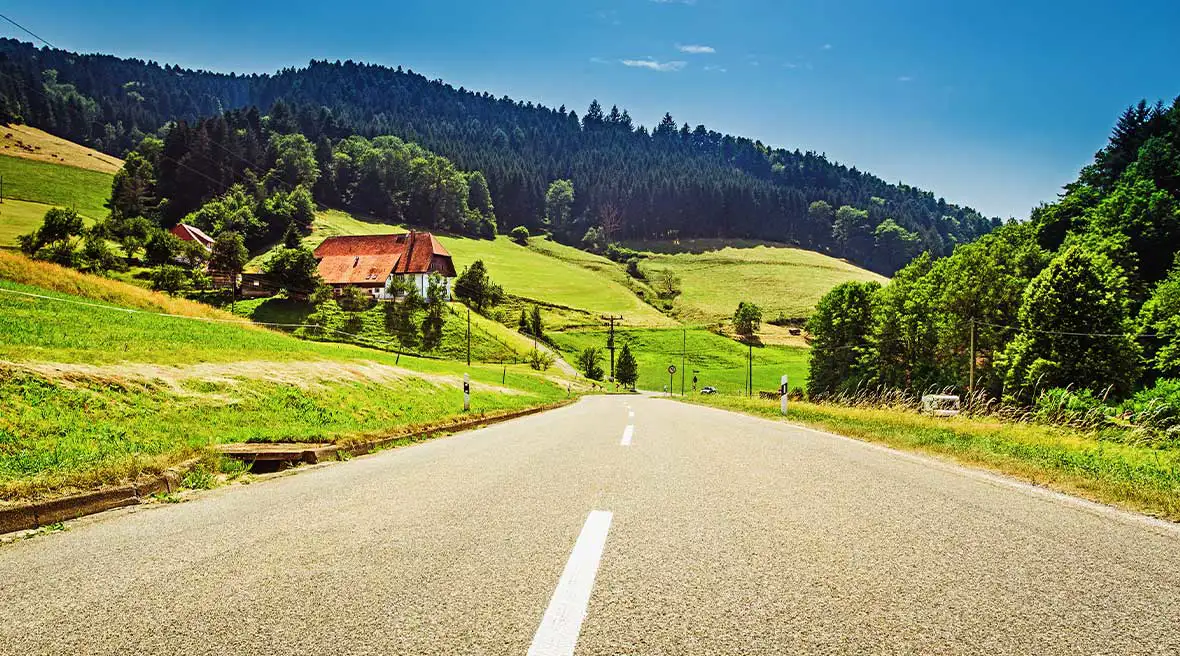
German roads are some of the best in Europe. It’s a wonderful way to explore the country, from the stunning scenic routes of the Black Forest to the high speed Autobahn. Plus, you won’t have to pay tolls if you are driving a car, and generally German cars are safer than elsewhere in Europe.
Drive to Germany with LeShuttle
Why take the train, coach or plane to Germany when you can drive and just stop wherever takes your fancy? Your journey to Germany starts with a 35-minute crossing from Folkestone to Calais with LeShuttle.
Driving to Germany FAQs
What are the speed limits in Germany?
- Autobahn: 120 km/h – 130 km/h (some sections have no restrictions)
- Non-urban roads: 100 km/h
- Urban areas: 50 km/h
Do I need a GB or UK sticker on my car driving to and in Germany?
Are there tolls on roads in Germany?
Do I need a vignette to drive on German motorways?
Join Club LeShuttle