Explore the stunning region of Burgundy in France
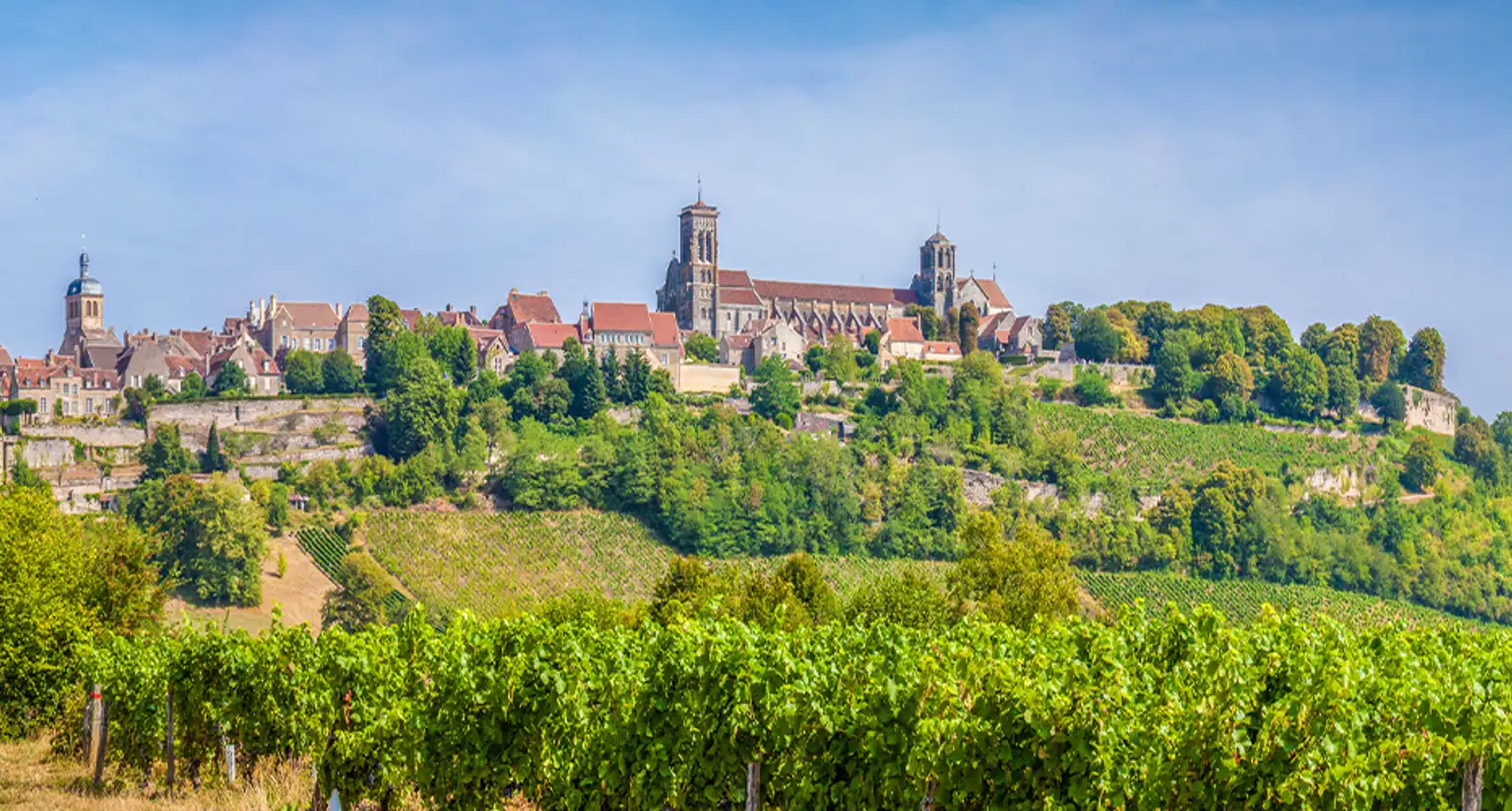
From vineyards to fine dining, we’ve taken a look at the best bits to visit on your next trip to Burgundy, France.
The region of Burgundy in east-central France has a long-standing reputation as a food and wine capital, hive of historical relics and a paradise for lovers of the great outdoors. With so much to offer, its scenic hillsides and ancient paths are fairly well trodden, but it’s still possible to find some truly captivating hidden gems throughout Burgundy.
Gorgeous wines, scenic towns and rolling countryside, Burgundy is perfect for any type of holiday, be that a romantic getaway or family holiday. From vineyards to fine dining, take a look at the best places to visit on your next trip to Burgundy France, including some hidden gems.
Getting there and around
Burgundy is approximately five hours' drive from LeShuttle at Calais — just a 35-minute journey from the UK. There are two routes, one via Paris and the other via Reims. If you plan to visit Dijons, Beaune or Tournus, the Reims route is the one for you: take the A26 to Troyes and then follow it southeast. Vézelay is accessible from the same road, but you take the southern branch. Please be aware that French motorways carry tolls.
Driving to some of the vineyards and attractions further afield may require you to use your vehicle, but within Burgundy lies an extensive tram and train network that connects the main towns of the area. The Bourgogne liberté card grants 25% off weekday prices and 50% off weekend prices which will help to keep the costs down. For more information about what to do and where to stay, see the Burgundy Tourisme website.
When is the best time to visit Burgundy?
Although considered by many as particularly pretty in the autumn during the wine harvest and chilled air (great for those red wines), due to its pretty countryside and wealth of activities, Burgundy is beautiful all-year-round. Summertime is generally hot and dry, and spring brings billowing clouds and warm days and nights, with September to November bringing the colourful leaves.
Which cities are in Burgundy?
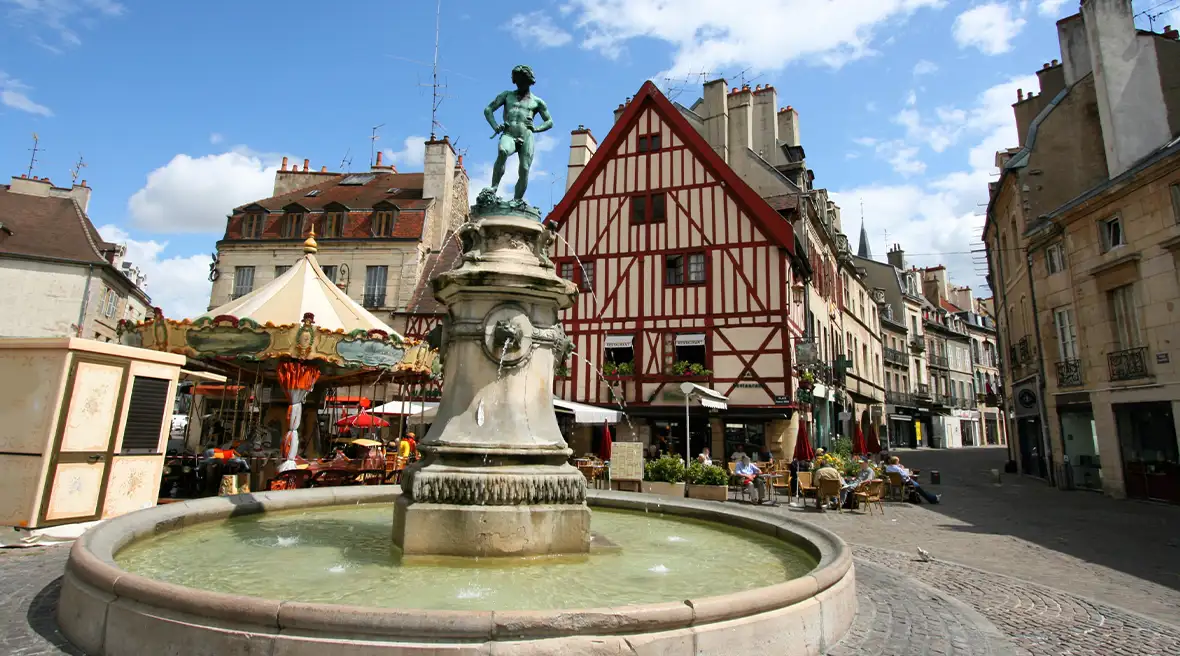
Dijon
The food and wine of Burgundy are not to be missed, and, when appreciating the region’s wines, it seems only natural to explore the capital, Dijon. For an authentic taste of Burgundy, choose one of the many traditional regional restaurants in the heart of the city. These local bistros highlight classic dishes such as boeuf bourguignon, oeufs meurette (poached eggs in a red wine sauce, bacon and mushrooms) and regional cheeses, paired with wines from the surrounding Cote de Nuits and Cote de Beaune.
In the centre of Dijon, next to the light rail service, find the Menuiserie, a 3 eco table café-restaurant serving breakfast snacks and aperitifs. Most of their produce come from the region itself. The place is cosy and convivial. The open frontage creates a seamless flow and natural extension of the dining room onto the pavement, so guests sit in that pleasant threshold between indoors and outdoors, while enjoying the intimate stone-walled interior. For something a bit more sophisticated, head over to Dr Wine, a restaurant and wine bar where you can choose from over 500 wines recommended by Sommeliers.
A little further afield from Dijon, La Ferme de la Ruchotte is a rustic farm using organic home-grown produce. La Ferme serves a set menu featuring a starter, main course, cheese and dessert. The owners, Frédéric and Eva Ménager, are a delight and welcome guests with open arms. They’re incredibly helpful and informative, offering a specially selected wine list.
Heritage and architecture
Not only Dijon has fantastic food, history there is just as compelling as its cuisine. Its historic centre is one of Burgundy’s greatest gems. A beautifully preserved district where medieval half-timbered houses stand alongside refined Renaissance mansions. Wandering through its narrow-cobbled streets, each one unveils colourful glazed-tile roofs, grand 15th-century facades, and countless architectural details reflecting the city’s long history as the capital of the Dukes of Burgundy. Landmarks such as the Palais des Ducs, the Tour Philippe le Bon, and the shaded squares and market halls give Dijon a rich and distinctive cultural identity.
Cite de la Gastronomie et du Vin
No visit to Dijon is complete without exploring the Cite de la Gastronomie et du Vin, a vibrant cultural complex celebrating Burgundy’s world-renowned culinary traditions. Located at the gateway to the historic centre, it brings together exhibitions, tasting rooms, workshops, and artisan food boutiques – each one dedicated to the region’s wine culture and exceptional gastronomy. It’s an inspiring place to unearth Burgundy’s flavours, craftsmanship, and UNESCO-listed food heritage.
Chablis
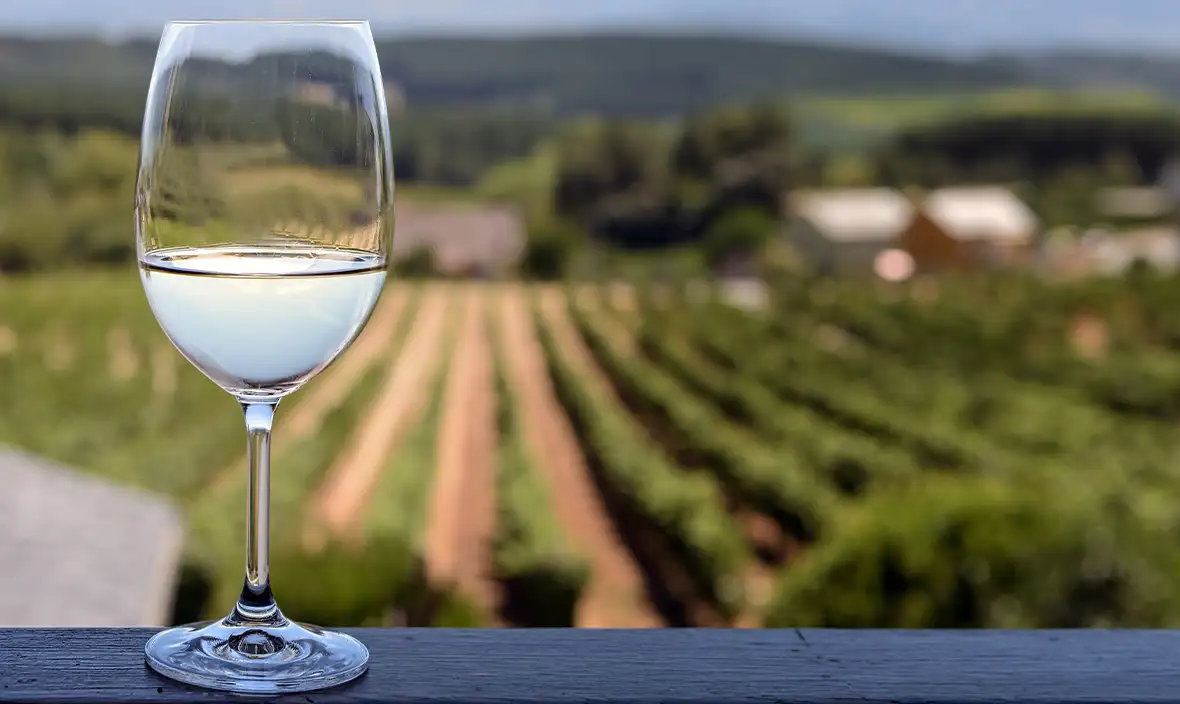
The northernmost wine district of the Burgundy region is Chablis. Wines from here tend to taste a little more acidic as the cool climate takes some of the fruitiness from the grapes. When in Chablis, be sure to visit the Abbaye de Pontigny, founded in 1114. It’s one of the last surviving examples of Cistercian architecture in Burgundy and hosts regular classical music concerts including an annual summer festival.
Worried about wine tasting? We cover everything you need to know about Wine Tasting in France.
Fontenay Abbey
Fontenay Abbey is the oldest preserved Cistercian abbey in the world and now a UNESCO World Heritage site. The Aynard family, descendants of the abbey’s founders maintain this beautiful building and its stunning grounds, making it a wonderful place to wander and explore. See where monks ate, slept and prayed and learn of the abbey’s part in the French Revolution. It was also once a paper mill, so there’s a lot of history here.
Beaune, The Route des Grands Crus
The heart of the Côte d'Or is the town of Beaune, which is famous for its wine tasting opportunities, even earning the title Burgundy’s wine capital. With such a reputation, the town has its fair share of wine tasting cellars, but there are a few that stand out. Domaine Rion is a family-run winemaker, with a delightfully dusty cellar filled with barrels. With eight hectares of land, their wines are made in the Côte de Nuits wine region, where they create wines such as Clos de Vougeot, a Grand Cru with cherry and black currant aromas. Visit Domaine Rion from Monday to Saturday and enjoy a tour and tasting in their atmospheric cellar.
Beaune is where sumptuous Chablis and Pinot Noir wines can be found, but in the south of the region you’ll find the Gamay wine grape. One of the few places where you can try Gamay in its purest form, there are several vineyards to explore in this part of Burgundy, as well as some to the south of the region.
Vézelay
Vézelay stands on the slopes and top of a hill overlooking the Cure Valley. Filled with medieval houses and quaint cobbled paths, it’s a one-of-a-kind place. Perhaps its main attraction is The Basilica of Saint Marie Madeleine, a UNESCO World Heritage site with a stunning exterior matched by its light-flooded nave. It was specifically designed to be lit in a rather magical way at midday and on the summer solstice. Be sure to stop by the Zervoz museum to see artworks by Calder, Miro and Max Ernst, open daily except on Tuesdays between 15th March and 15th November.
Places to visit in Burgundy
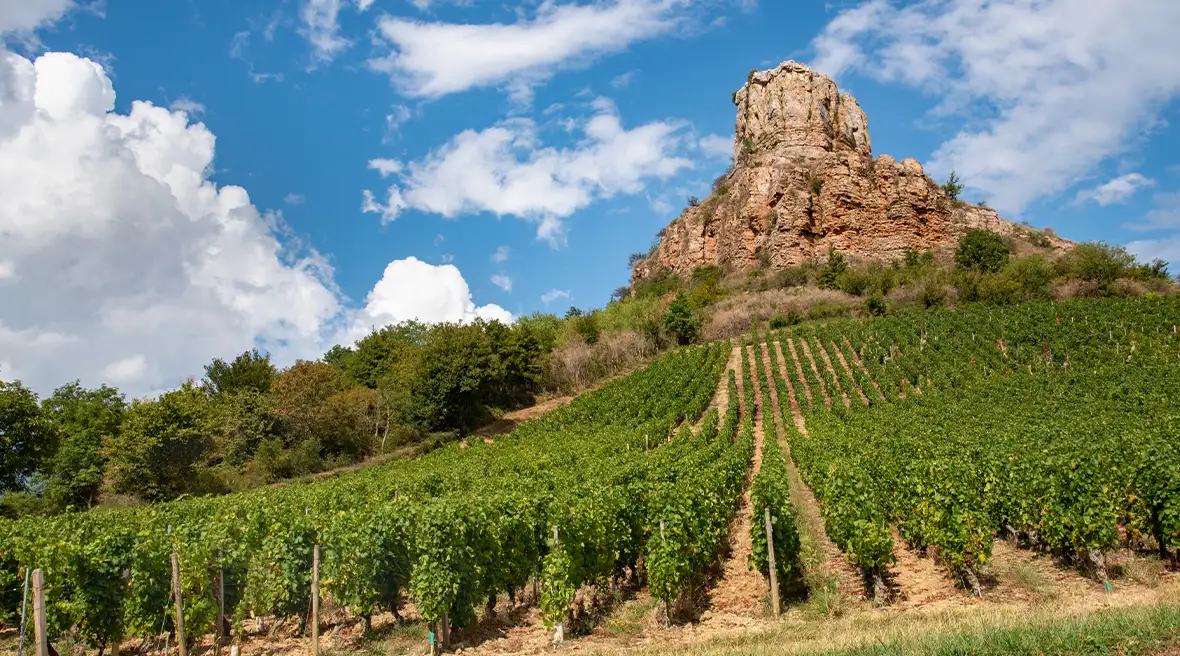
Rock of Solutré
In the depths of southern Burgundy, the Rock of Solutré juts abruptly out of the landscape. Standing proudly at 495-metres high, it’s thought that the rock has been of great importance since prehistoric times, when it was used as a site to hunt bison and reindeer. Walking through the Mâconnais vineyards surrounding the rock is a real treat and, unsurprisingly, the best views can be found at the top. That said, it’s easy enough to reach the summit in under an hour, and on a clear day you might even see the Alps.
Forêt des Bertranges
After enjoying the region’s delicious food, you might want to get a little exercise. The second-largest oak forest in France, the Forêt des Bertranges is a beautiful place to visit, especially in autumn when the leaves are changing. Near to the pretty commune of La Charité-sur-Loire, the forest is vast, covering about 10,000 hectares, and there are countless walking and hiking routes to explore. You can go mushroom picking and spot deer and other wildlife. You’re also not limited to walking, as there are horse riding and cycling opportunities throughout the forest.
Parc Naturel Régional du Morvan
For a wilder, more rural side of Burgundy, the Parc Naturel Régional du Morvan offers a striking contrast to the region’s vineyards and historic towns. Set in the very heart of Burgundy, this vast protected area stretches across wooded hills, quiet valleys, and shimmering lakes, forming one of the region’s most unspoilt landscapes. It’s a place of deep forests, traditional hamlets, and winding trails. From the serene shores of Lac des Settons to the panoramic viewpoints of Mont Beuvray, the Morvan reveals a peaceful, natural world that feels far removed from the bustle of modern life - yet remains only a short drive from Burgundy’s major towns. Perfect for hiking, swimming, or simply breathing in the fresh air, it’s the ideal escape for anyone seeking space, wilderness, and a completely different perspective on the region.
Tournus
The quaint commune of Tournus is a brilliant place to stay during your trip to Burgundy. Nestled alongside the Saone River, its history can be seen through winding alleys and 11th century buildings. Be sure to check out the Hotel Dieu, a 17th century building which was once the city hospital, and the Abbey of Saint-Philibert de Tournus, an ancient Roman-style church, boasting 12th century monastic buildings.
Outside of the town’s many historical sites you can find a selection of superb restaurants. Head to Meulien for a gorgeous four-course menu featuring a starter, main, cheese and dessert, with mains including flavoursome pigeonneau and deliciously tender steak. More fine dining options can be found at the grand restaurant Greuze, while more hearty fare can be enjoyed at Le Bourgogne.
Châteauneuf
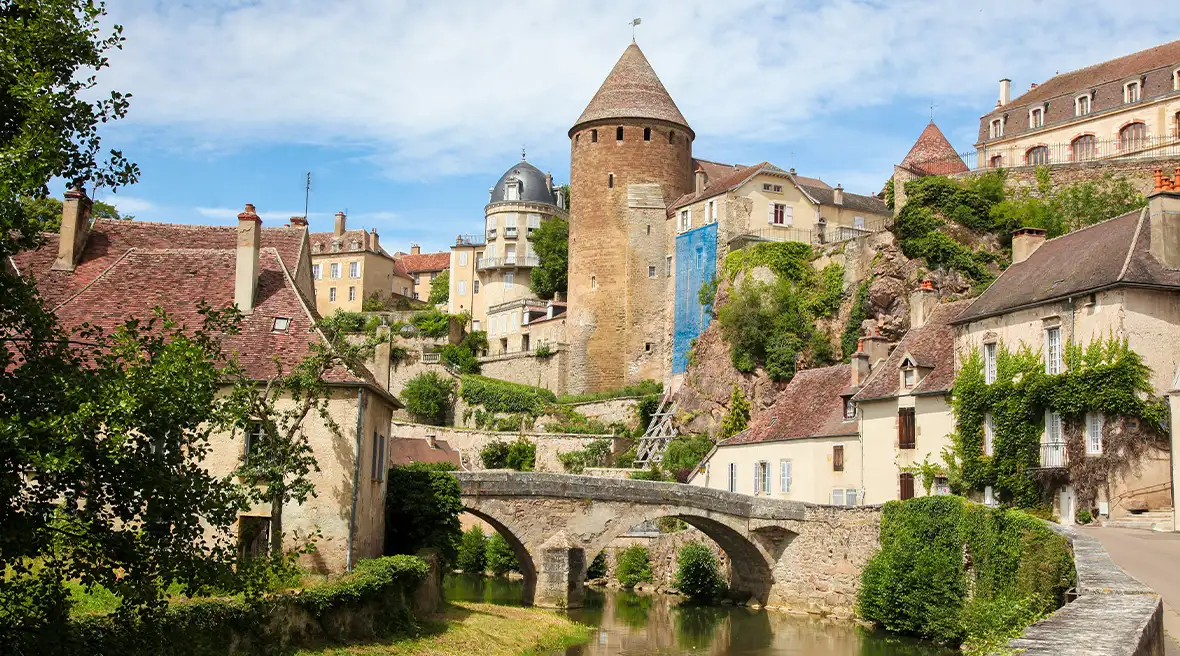
Arguably one of France’s prettiest towns, Châteauneuf-en-Auxois is a secret hideaway from Burgundy’s busier towns and cities. Home to the Châteauneuf-en-Auxois castle, which sits alongside the Burgundy canal, the town can easily be spotted during the drive from Dijon to Autun, sitting proudly on the hillside.
There are plenty of shop-lined streets to explore in Châteauneuf-en-Auxois, selling everything from local arts and crafts to coffee and pastries. As well as the Châteauneuf-en-Auxois castle, you can find a chapel with 15th century paintings, plus buildings from the 14th-17th centuries throughout the town.
The Hospices de Beaune or Hôtel-Dieu de Beaune
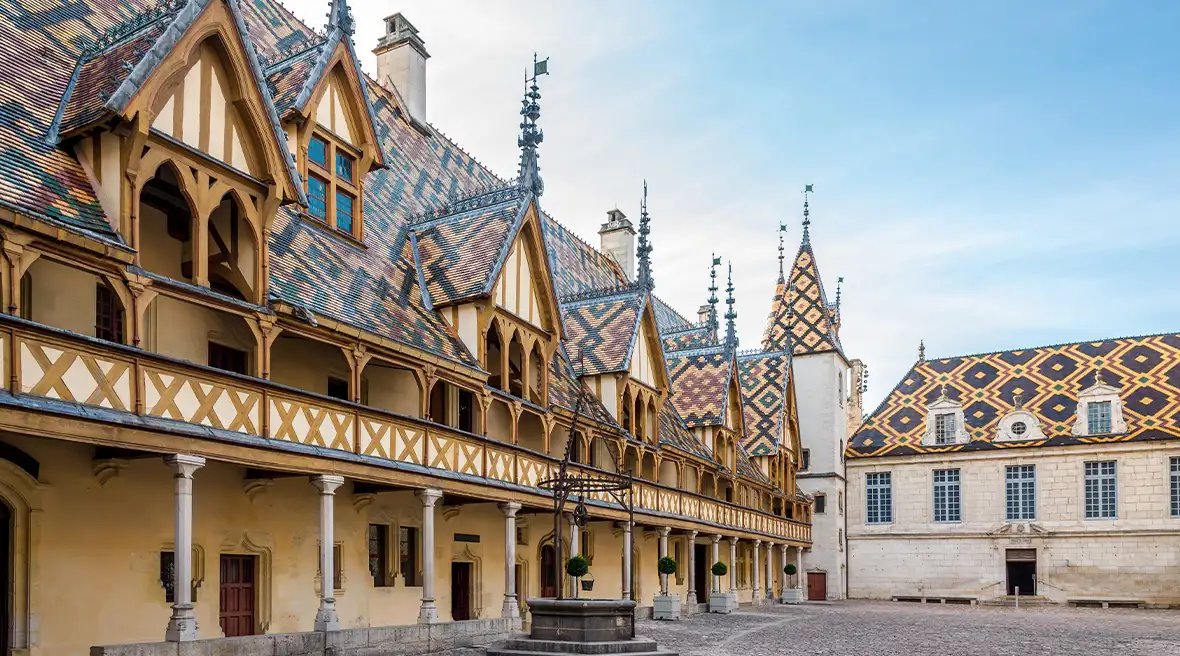
One of Burgundy’s most emblematic landmarks, the Hospices de Beaune - also known as the Hôtel-Dieu - is a masterpiece of 15th-century architecture and a symbol of the region’s long tradition of charity and craftsmanship. Founded in 1443 by Nicolas Rolin, Chancellor to the Duke of Burgundy, and his wife Guigone de Salins, it was created as a refuge for the poor and sick at a time when famine, war, and disease were ravaging the population. Their vision produced one of Europe’s finest medieval hospital complexes, designed to offer both medical and spiritual care.
The building’s multicoloured glazed-tile roof, with its geometric patterns and vibrant hues, has become an icon of Burgundy’s architectural identity. Inside, the vast “Salle des Pauvres” gives a powerful sense of what hospital life looked like in the Middle Ages, with its wooden beams, orderly rows of beds neatly flanking the hall with intricately carved, Gothic finials.
Today, the Hospices house a museum and cultural legacy, which continues through the world-famous wine auction, held annually since 1859. The sale supports the preservation of the monument and local charitable initiatives, ensuring that the founders’ spirit of generosity lives on. A visit here reveals the heart of Beaune’s history - where art, architecture, and wine heritage intertwine beautifully.
Join Club LeShuttle